Short on time? Start from what citizens need to get done, fix the service end to end, and retire old systems in stages. Pair every technical change with changes to policy, process and skills, and publish progress so people can see the benefit.
Public services touch almost everyone: licences, benefits, taxes, health appointments, permits and records. Many still rely on forms, back-office systems that are decades old and processes that move data by hand from one office to another. Citizens feel this as long queues, repeated questions and unclear status updates.
Digital transformation in government is the work of redesigning services around the people who use them and replacing the systems that hold them back. This guide sets out the main principles and steps. It applies to national agencies and to local councils with a small team and a tight budget.
Key takeaways
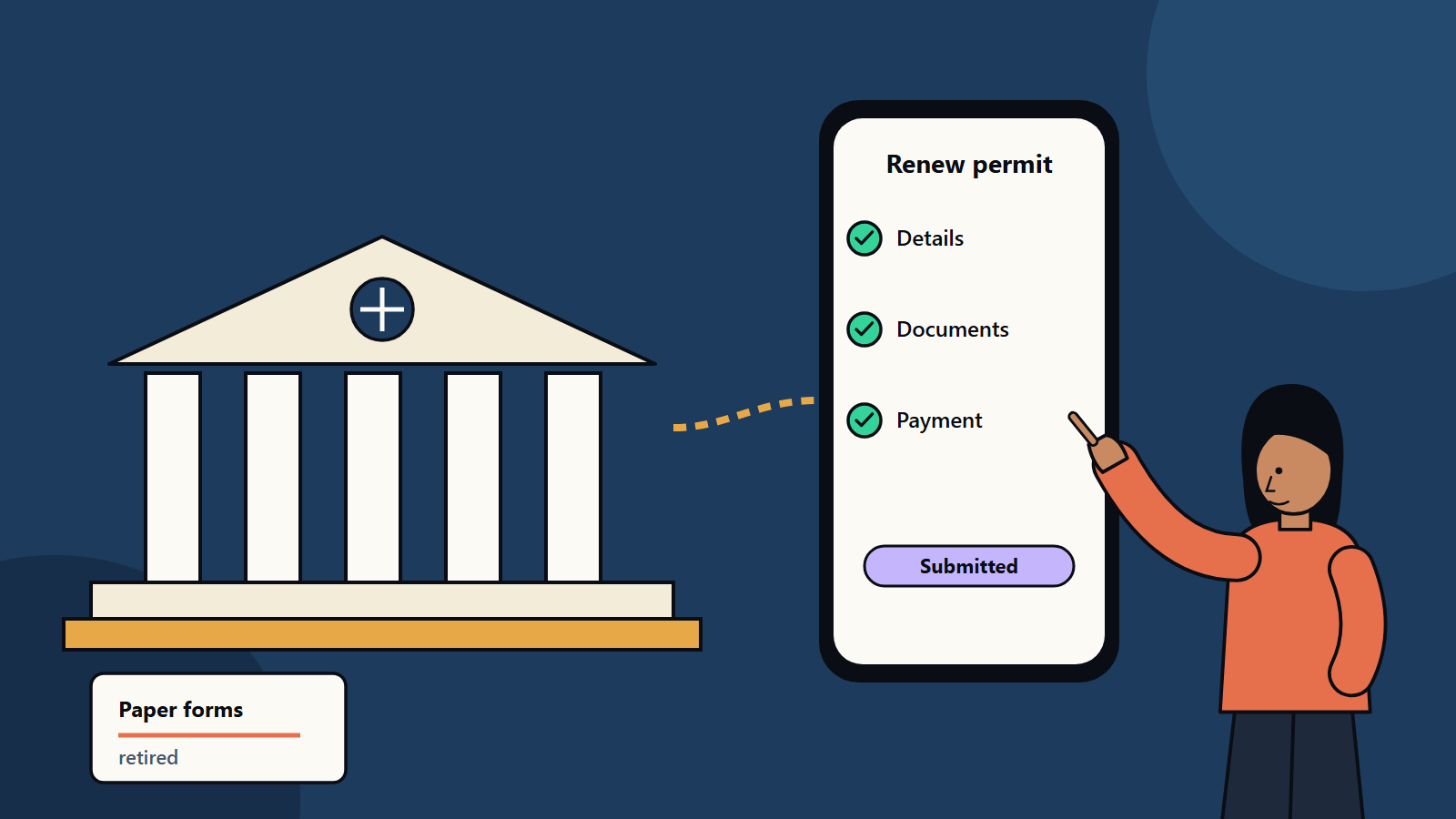
- Design around user needs and complete journeys, such as “renew a licence”, and treat departmental forms as an internal detail.
- Replace legacy systems in slices, keeping services running throughout.
- Shared platforms for identity, payments, notifications and data reduce duplication.
- Accessibility, privacy and security are requirements from day one.
- Measure what users experience, and publish results.
Why services stay stuck
Common causes include:
- Layers of legacy technology that few people understand and that cannot connect to modern tools.
- Siloed organisations, where each department owns its data and process.
- Paper-based steps that turn digital forms into printouts.
- Procurement models built around large, fixed contracts that struggle with change.
- Skills gaps in product management, design and engineering.
- Risk caution, where fear of failure slows even small improvements.
Start with user needs
The GOV.UK Service Manual is a well-known public reference for building government services. It emphasises learning about users, building in small steps, testing with real people and improving after launch. These ideas hold in any country.
In practice:
- Research users. Interview residents, businesses and the staff who process requests. Map the whole journey, including offline steps.
- Find the pain points. Where do people give up, call for help or make errors?
- Set measurable goals. Examples include completion rate, time to decision, cost per transaction and satisfaction.
- Prototype and test. Put simple versions in front of users before full build.
Fix the whole service
A new online form that feeds an unchanged back office just moves the paperwork. Look at:
- Policy and rules: can rules be simplified, or applied by software?
- Process: can steps be removed, combined or automated?
- Data: can the service reuse information the government already holds, so users give it once?
- Channels: online, phone and in person should give consistent results, with help for those who cannot go online.
Modernise legacy systems in stages
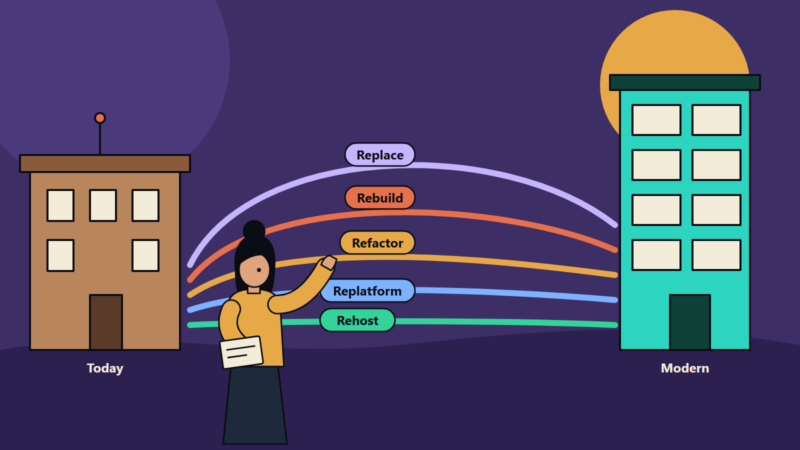
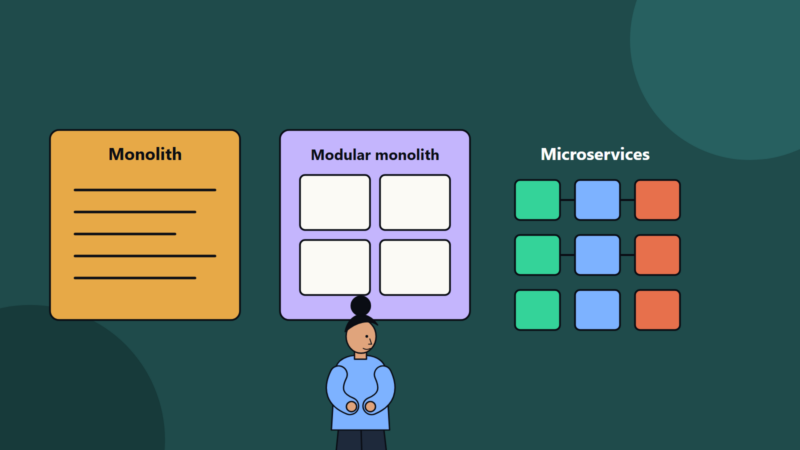
Large single-step replacement projects carry high risk. A safer pattern is to wrap or surround the old system with APIs, move one function at a time to a modern platform and retire the old code when it is no longer used. Our article on legacy application modernization compares the main routes and how to choose.
Plan data migration with care. Records often carry legal retention duties, so decide what moves, what is archived and what is destroyed.
Build shared platforms
Reusable components save money and give citizens a consistent experience:
- Digital identity and sign-in.
- Payments.
- Notifications by email, SMS and app.
- Document upload and storage.
- Case management.
- Data exchange between agencies through secure APIs.
- Design system for accessible, consistent interfaces.
Accessibility, inclusion and trust
Public services must work for everyone, including people with disabilities, limited connectivity, low digital confidence or limited literacy in the main language. Follow recognised accessibility standards such as the Web Content Accessibility Guidelines, offer assisted channels and plain language, and test with diverse users.
Trust depends on privacy and security. Collect only the data you need, explain how it is used, apply strong access controls and log access. Follow the data protection laws of your jurisdiction, which vary widely.
Use AI with care
Chat assistants and document processing can speed up responses and reduce backlogs. In public services, decisions affect rights and entitlements, so keep people responsible for decisions, test for bias, explain outcomes and keep records. Start with low-risk uses such as answering general questions and summarising documents.
Procurement and delivery
- Break large contracts into smaller, outcome-based stages.
- Prefer open standards to avoid lock-in.
- Use multidisciplinary teams that include policy, operations, design and engineering.
- Release early and often, and show working software to stakeholders.
- Build internal skills so the organisation can own the service after launch.
Measure and publish
Track completion rates, call volumes, processing times, error rates, accessibility results, cost per transaction and satisfaction. Share results openly. Visible progress builds support from staff, leaders and the public.
A first-year roadmap
- Months 1 to 3: choose two or three high-volume services, research users, set baselines.
- Months 4 to 6: build and test prototypes, agree data sharing and security approach.
- Months 7 to 9: launch a first service in limited release, gather feedback.
- Months 10 to 12: scale to full release, begin the next service, retire the first old components.
Partnering with SoftSapien on public services
SoftSapien supports public bodies and the organisations that serve them with strategy, design, engineering and integration. We work on business transformation, enterprise software engineering and cybersecurity consulting, with delivery teams across several regions.
To start a conversation about a service you want to improve, go to the contact page. You can chat with our team, send a message or schedule a free consultation call.
Frequently asked questions
What is digital transformation in government?
It is the redesign of public services around user needs and the replacement of legacy systems and manual processes, so people can complete tasks quickly, securely and with less repeated effort.
Why is legacy modernization hard in the public sector?
Old systems are poorly documented, data is siloed between departments, procurement favours large fixed contracts and records carry legal retention duties.
How should agencies replace old systems?
Wrap or surround the old system with APIs, move one function at a time to a modern platform and retire old components once they are no longer used.
How can AI be used in public services?
Start with low-risk uses such as answering general questions and summarising documents. Keep people accountable for decisions that affect rights, test for bias and keep records.
Can SoftSapien support a public service project?
Yes, with strategy, design, engineering, integration and security. Contact SoftSapien through the contact page to chat with our team, send a message or schedule a free consultation call.