Short on time? An MVP, or minimum viable product, is the smallest version of your product that lets real users complete one valuable task so you can learn whether it matters. Pick one user, one problem and one core flow, build only what supports it, and decide in advance what result will tell you to continue, change direction or stop.
Founders often try to build everything before anyone has used anything. The result is a long delivery, a large bill and a product that solves a problem nobody had. A minimum viable product turns that around. You build a small, usable version, put it in front of real people and let their behaviour guide the next steps.
The term “minimum viable product” was popularised through the lean startup movement. The idea applies to a solo founder with a weekend project and to a corporate team testing a new line of business. This guide covers how to choose what goes in, what stays out, and how to measure the result.
Key takeaways
- An MVP tests a hypothesis about users and value. It is a learning tool before it is a product.
- Define one target user, one problem and one core journey.
- Build the smallest set of features that lets users complete that journey.
- Set success measures and a decision rule before launch.
- Plan the technology so you can grow without a full rewrite, while keeping the first version simple.
Start with the hypothesis
Write one sentence: “We believe that [user] struggles with [problem] and will [action] if we provide [solution].” Each part can be tested. If you cannot describe the user and their problem in specific terms, spend time on interviews before writing code.
Talk to at least ten people in your target group. Ask about their current approach, what it costs them and what they have already tried. Listen for strong, repeated complaints. Enthusiasm about your idea matters less than evidence that they act to solve the problem today.
Choose the core journey
List what a user must do to get value. For a booking tool it may be: find availability, choose a slot, confirm and pay. For an invoicing product: add a client, create an invoice, send it, see its status. That journey is your MVP.
Decide what to build and what to leave
Sort ideas into three groups:
- Must have: without it the journey fails.
- Should have: improves the experience, but users can complete the task without it.
- Later: everything else.
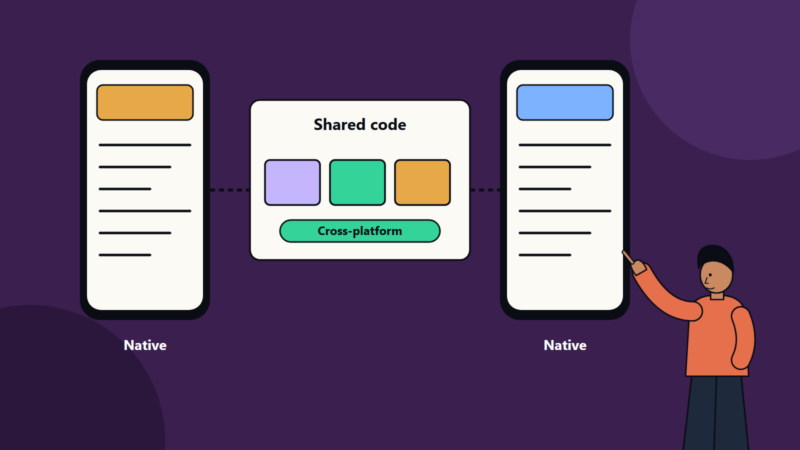
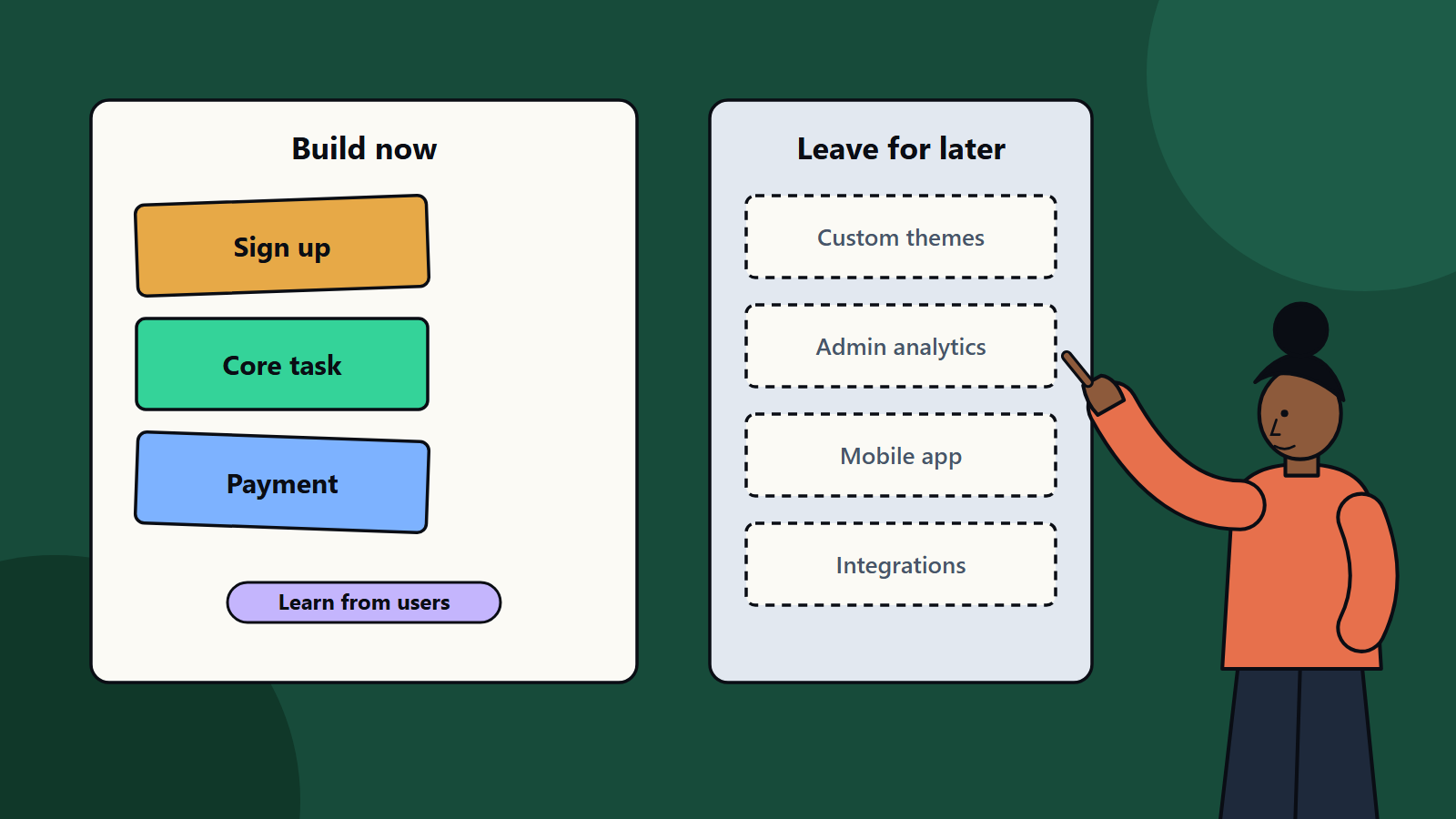
Typical items that wait: custom themes, advanced analytics, multiple user roles, extensive settings, native mobile apps, integrations with many tools and automated reports. Add them only when real users ask and usage supports the case.
Some functions can be handled manually at first. A founder may approve sign-ups by hand, process payments through a hosted service and send reports by email. This is sometimes called a concierge approach, and it allows you to learn before you automate.
Types of MVP
- Landing page test: describe the product, collect sign-ups and measure interest.
- Prototype: clickable designs that let users try the flow without working code.
- Single-feature product: one function done well.
- Manual-behind-the-scenes service: the interface looks automatic, while people do the work.
- Piecemeal build: assemble existing tools such as forms, spreadsheets and payment links.
Choose the cheapest form that can answer your question.
Plan the technology
Choose proven, well-supported technology that your team or partner knows well. Favour speed of delivery over novelty. A few practical guidelines:
- Use hosted services for authentication, payments, email and storage, so your own build time goes to the core journey.
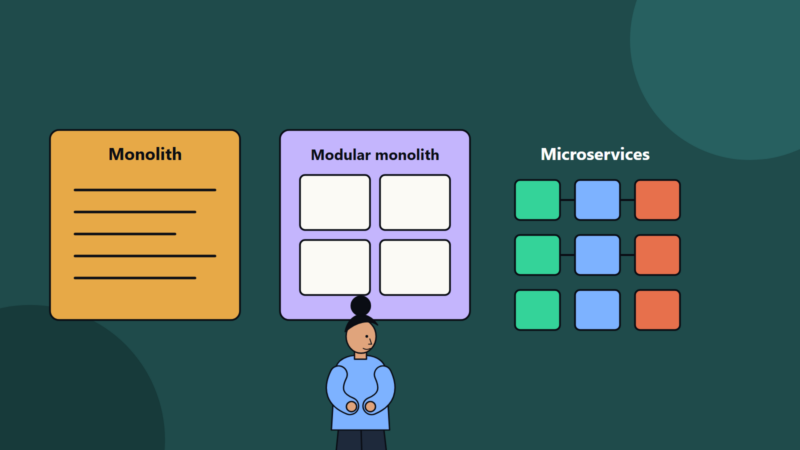
- Start with a simple architecture, such as a single application and one database, and keep modules separate so they can be split later.
- Write automated tests for the core journey.
- Set up basic monitoring and error alerts from day one.
- Protect user data from the start, with encryption, access control and a privacy notice that matches what you collect.
- Keep the code and documentation in a repository you own.
Avoid the two extremes: a throwaway prototype that cannot be extended, and an over-engineered platform built for scale you do not yet have.
Design for clarity
Good design in an MVP means clear. Use familiar patterns, limit options, write plain labels and make the first task obvious. Test with five users and watch where they hesitate. Five sessions usually reveal the main problems.
Set measures and decision rules
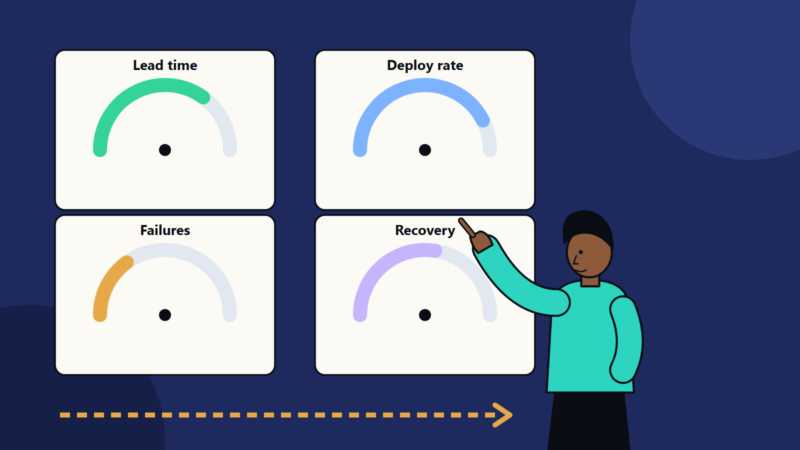
Before launch, choose a few measures tied to your hypothesis:
- Activation: share of new users who complete the core journey.
- Retention: share who return after a week and after a month.
- Willingness to pay: pre-orders, paid pilots or conversion to a paid plan.
- Qualitative feedback: themes from interviews and support requests.
Write the rule: “If at least X percent of sign-ups complete the journey within two weeks and Y users commit to paying, we continue. If not, we revisit the problem or the audience.” A rule agreed in advance protects against wishful reading of data.
Timeline and budget
Scope controls both. Many MVPs can be built in weeks to a few months when the journey is narrow. Fixed-scope delivery with a clear list of features helps keep cost predictable. Hold back a share of the budget for changes after launch, because early feedback usually leads to adjustments.
After launch
- Watch the numbers and talk to users every week.
- Fix blockers first, then improve the most used steps.
- Add features in small releases, each tied to a learning goal.
- Decide whether to continue, change direction or stop, based on your rule.
- Invest in robustness, security and performance once the value is proven.
Mistakes to avoid
- Calling a half-built product an MVP while promising a full feature set.
- Adding “just one more” feature before launch, again and again.
- Testing with friends who are not the target user.
- Ignoring negative feedback.
- Building a complex admin system before there are users to administer.
Building your MVP with SoftSapien
SoftSapien works with founders, small businesses and corporate innovation teams to turn ideas into working products. We help define the core journey, choose an approach that fits the budget and deliver in short cycles, with clear ownership of your code and data. Related services include custom software development, web application development and UI and UX design.
When you want to test an idea, open the contact page. You can chat with our team, send a message or schedule a free consultation call.
Frequently asked questions
What is an MVP?
A minimum viable product is the smallest version of a product that lets real users complete one valuable task so you can learn whether it solves a real problem.
What features should an MVP include?
Only those that support the core user journey. Custom themes, advanced analytics, many user roles and extra integrations usually wait until real users ask.
How long does MVP development take?
Narrow scopes can take weeks to a few months. Scope controls both time and budget, so fixed-scope delivery with a clear feature list helps.
How do I know whether the MVP worked?
Set measures and a decision rule before launch, such as activation, retention and willingness to pay, and agree the thresholds for continuing, changing direction or stopping.
Can SoftSapien build my MVP?
Yes. We help define the core journey, choose a suitable approach and deliver in short cycles with clear ownership of your code and data. Contact SoftSapien through the contact page to chat with our team, send a message or schedule a free consultation call.