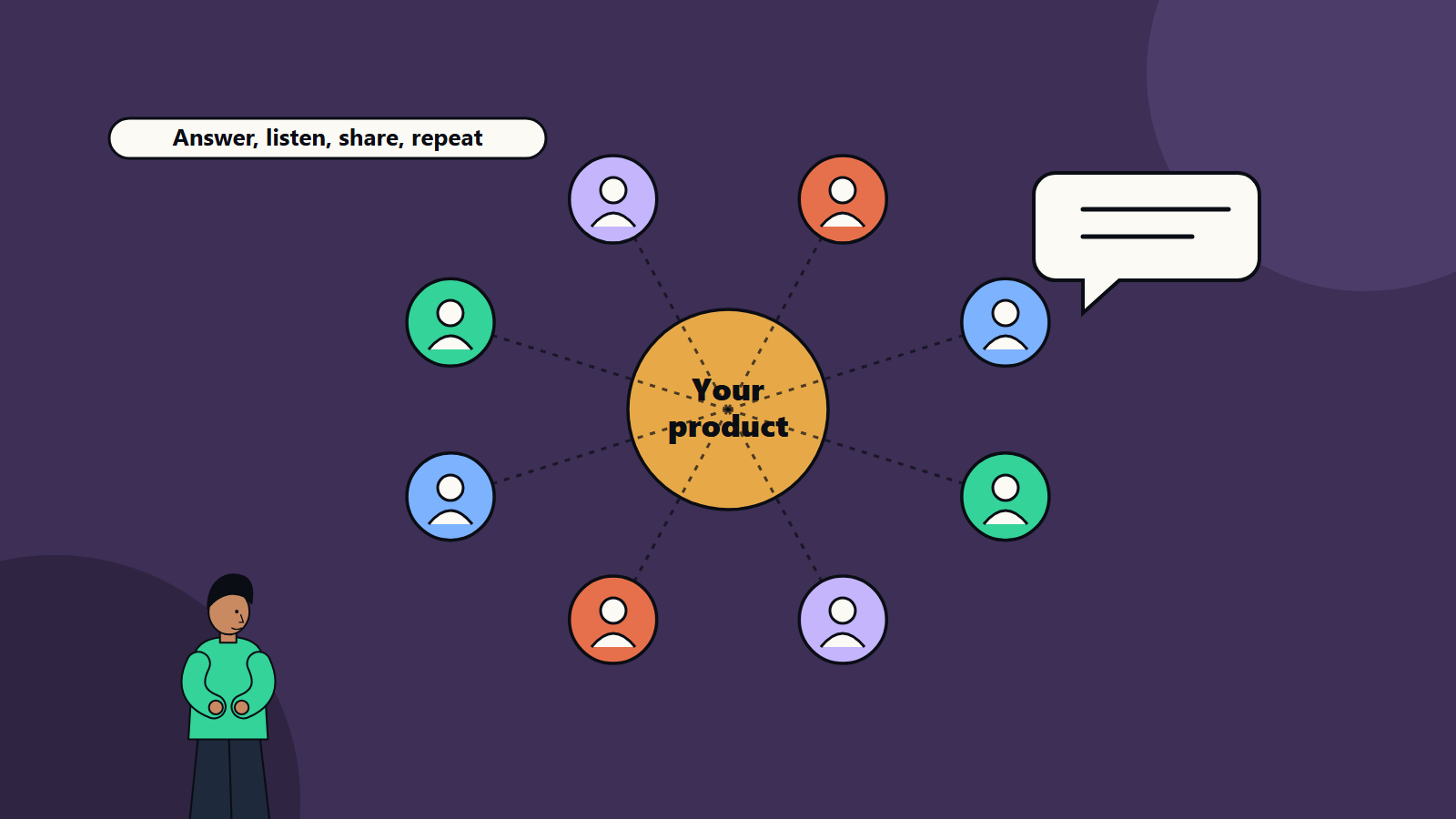
Short on time? A software community is a place where users and practitioners help each other, share what they build and shape the product. Define its purpose, pick a home where your users already gather, seed it with useful content and real people, set clear rules, recognise contributors and measure health by participation and outcomes. Plan for years, since communities grow slowly.
Behind many successful software products sits a community: a forum where users answer each other’s questions, a chat group where developers trade tips, local meet-ups, user conferences or an open source project with contributors around the world. Communities lower support costs, speed product learning and create loyalty that advertising cannot buy.
They are also easy to start badly. An empty forum signals neglect, and a community created purely to promote a product attracts nobody. This guide describes how to build one that people want to belong to, for a developer tool, a business application or a consumer product. It suits a start-up with its first users and an enterprise vendor with a global base.
Key takeaways
- Start with a purpose that serves members first: learning, solving problems, networking or influence on the product.
- Meet people where they already are before building a new space.
- Founders and staff must show up daily at first, answering questions and starting conversations.
- Clear rules, moderation and recognition keep it healthy.
- Measure participation, peer help and business outcomes, and be patient.
Why build a community
- Support: peers answer questions, and content stays searchable, which deflects tickets.
- Product insight: members reveal needs, workarounds and ideas, and test features early.
- Adoption and retention: people who belong stay longer and use more of the product.
- Advocacy: satisfied members recommend you, and share their work.
- Content: tutorials, templates, plug-ins and case studies from members extend your reach.
- Talent and partners: active members become hires, consultants and integration partners.
- Resilience: a community supports a brand through problems.
Decide the purpose and audience
Answer:
- Who is it for: all users, a segment such as developers or administrators, customers only or the wider industry?
- What will members get: help, learning, recognition, access to experts, early access or peer networks?
- What will the company get: support relief, feedback, advocacy, adoption?
- What is the scope: your product only, or the wider problem space?
A community around a problem often grows wider than one built around a single product, since members include those who use competing and complementary tools.
Choose the place
Common options:
- Discussion forums: searchable, structured and good for long-term knowledge.
- Chat platforms and messaging groups: fast, informal and active, though conversations disappear quickly.
- Social media groups.
- Developer platforms and open source hosting, with issue trackers, discussions and contribution workflows.
- Question-and-answer sites, where your presence supports existing conversations.
- In-person and virtual events: meet-ups, user groups, hackathons and conferences.
- In-product communities and feedback boards.
- Newsletters and content hubs.
Join and help in existing communities before building your own. If you create a space, choose one primary home to avoid splitting a small group across many places. Consider moderation tools, privacy, accessibility, language and regional needs. Local platforms and languages matter in many markets.
Launch with a seed
- Invite a small founding group of engaged customers and advocates, ideally dozens.
- Prepare content: welcome posts, getting-started guides, frequently asked questions, open discussion topics and examples.
- Staff presence: assign named people to welcome members, answer questions within hours and start conversations. Product managers and engineers add credibility.
- Make the first experience useful, with questions answered well and quickly.
- Set expectations about what the community is for and how to get official support.
Rules and moderation
- Publish a code of conduct covering respect, harassment, spam, self-promotion, confidentiality and legal matters.
- Moderate consistently and visibly, with a team and escalation paths.
- Recruit volunteer moderators from trusted members, with training and recognition.
- Handle conflicts calmly and transparently.
- Respect privacy and data protection laws. Explain what data you collect and how it is used. Protect members from harassment and unwanted marketing.
- Do not allow the community to be used to leak confidential information, and be clear on how security issues should be reported.
- Provide accessible spaces for people with disabilities.
Keep it alive
Content and programmes
- Regular formats: weekly questions, monthly showcases, ask-me-anything sessions with engineers and challenges.
- Educational content: tutorials, webinars and office hours. Our guide to B2B content strategy explains how to plan content from real questions.
- Member stories and spotlights.
- Events: virtual and local meet-ups, with toolkits for volunteers to run them.
- Product previews and feedback sessions.
Recognition and growth paths
- Thank contributors publicly.
- Offer badges, titles and levels based on helpful behaviour.
- Create ambassador or champion programmes with clear expectations and benefits, such as early access, direct lines to product teams and event invitations.
- Offer opportunities to speak, write and co-create.
- Avoid pay-to-play schemes that distort behaviour, and be careful with incentives that encourage low-quality posts.
Connect to the business
- Support: route unresolved questions to staff, and turn common threads into documentation.
- Product: close the loop on feedback, show what changed because of the community and credit members.
- Marketing and sales: invite members to share stories with permission. Do not turn the community into a sales channel.
- Customer success: connect users facing similar challenges.
Our guide to B2B social media explains how community spaces fit among other channels.
Measure health
Choose a small set of indicators:
- Growth: new members, activation, such as first post or first reply.
- Participation: active members, posts, replies and return rate.
- Peer help: share of questions answered by members, and time to first reply.
- Quality: helpful answers marked, satisfaction and sentiment.
- Business outcomes: support deflection, product adoption among members, feature ideas implemented, retention and referrals.
- Content value: searches resolved, views of community answers and documentation created from threads.
Track trends over time, review monthly and share results with stakeholders.
Risks and how to handle them
- Negative feedback: welcome honest criticism, respond openly and fix problems. Deleting criticism damages trust.
- Toxic behaviour: enforce rules early.
- Over-reliance on staff: build member leadership.
- Burnout among moderators and community managers. Share the load.
- Legal and compliance: moderation of user-generated content, intellectual property, advertising rules and regional laws.
- Security: protect accounts, and educate members on phishing and impersonation.
- Product changes that anger members: communicate early, and explain reasons.
Staffing and budget
A small community can start with part of one person’s time. As it grows, you may need a community manager, moderators, developer advocates, content creators, an events coordinator and analytics support. Budget for platform costs, tools, events, swag and recognition, and measure return honestly.
Common mistakes
- Launching a space with no seed members or content.
- Treating the community as a marketing broadcast channel.
- Slow replies to questions.
- No clear rules or moderation.
- Spreading across too many platforms.
- Ignoring feedback.
- Giving up after three months.
- Measuring only member count.
A first ninety days
- Days 1 to 30: define purpose and audience, choose the platform, write rules and recruit twenty to fifty founding members.
- Days 31 to 60: launch quietly, answer every post within hours and run a weekly discussion.
- Days 61 to 90: host the first event, recognise early contributors, share a progress report and plan the next quarter.
How SoftSapien supports community programmes
SoftSapien’s digital strategy team helps software companies plan communities, create content and programmes and connect them to support, product and marketing goals. See our social and community and digital experience services.
To plan your community, use the contact page to chat with our team, send a message or schedule a free consultation call.
Frequently asked questions
Why build a software community?
Peers answer questions, members reveal needs and test features, adoption and retention rise, members advocate and share content, and the brand becomes more resilient.
Where should a community live?
Where your users already gather. Join existing communities first, and if you create a space choose one primary home to avoid splitting a small group.
How do I launch a community?
Invite a small founding group, prepare useful content, assign named staff to answer within hours and set clear expectations and a code of conduct.
How do I measure community health?
Track activation, participation, share of questions answered by peers, time to first reply, quality and business outcomes such as support deflection and product adoption.
Can SoftSapien help plan a community?
Yes, from strategy to programmes. Contact SoftSapien through the contact page to chat with our team, send a message or schedule a free consultation call.