Short on time? Give every location its own page and its own business profile, keep names, addresses and phone numbers identical everywhere, mark each location up with structured data, collect genuine reviews and make each page useful to people near that location. Avoid thin copies of the same text.
A customer searching for “dentist near me”, “IT support in Leeds” or “pharmacy open now” wants a nearby answer immediately. Businesses with one location can win these searches with a well-kept profile and a good website. Businesses with many locations face a bigger task: each branch must be found, trusted and chosen, while the brand stays consistent.
This guide covers the main building blocks of local SEO for multi-location businesses, from franchises and clinics to retail chains and service firms with regional offices. The principles apply across countries, though platforms and listing sites differ by market.
Key takeaways
- Each location needs its own page, its own business profile and its own reviews.
- Consistency of name, address and phone details across the web helps search engines trust your information.
- LocalBusiness structured data gives search engines clear facts about each location.
- Location pages must offer real local value, such as staff, services, photos, directions and local proof.
- Measure by location, and manage reviews and listings as an ongoing process.
Start with accurate data
Create one master record for each location with:
- Official business name as used in real life.
- Full address, with a consistent format.
- Phone number with country and area code.
- Website address for the location page.
- Opening hours, including holidays and special hours.
- Categories and services.
- Photos, accessibility information and payment methods.
- Service areas, if staff travel to customers.
Use this record as the single source for your website, business profiles, social pages and directories. Inconsistent details confuse customers and search systems.
Business profiles
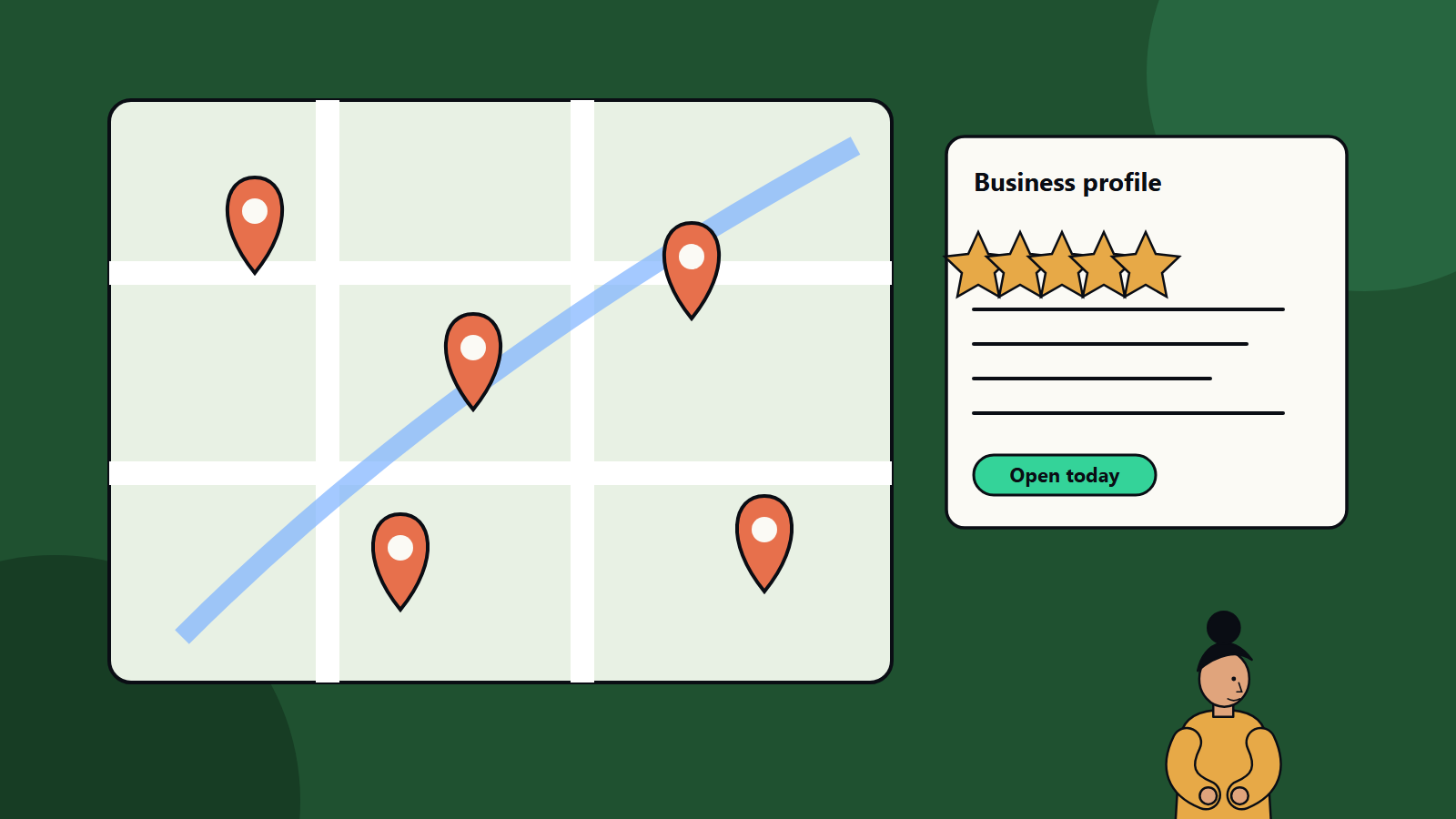
Claim and verify a profile for each location on the main search and map platforms in your markets, and on other local directories that matter in your sector. Follow each platform’s rules, which differ in what they allow for names, categories and service areas. Keep hours current, add photos regularly, respond to questions and use posts or updates where offered.
Where a location has no public premises, such as a mobile service, set service areas instead of showing an address, in line with platform guidelines.
Location pages on your website
Every location deserves a page that works for visitors and search engines:
- A clear heading with the service and place, written naturally.
- Name, address, phone number, hours and a map.
- Directions and parking or transport information.
- The services available at that location.
- Photos of the premises and team.
- Reviews or testimonials from local customers, with permission.
- Local details such as nearby landmarks, community involvement or area-specific offers.
- A clear call to action: book, call, get directions.
- Links to a parent page that lists all locations.
Avoid pages that differ only by the town name. They offer little value to people and may be treated as low-quality.
Structured data
Google’s documentation on LocalBusiness structured data explains how to describe each location. The required properties are address and name. Recommended ones include opening hours, geographic coordinates, telephone number and the page address. Use the most specific business type available, and mark up the details that are visible on the page. Validate the markup and check for errors in Search Console.
Reviews
Reviews influence both rankings and choices. To manage them well:
- Ask satisfied customers to leave a review at the moment of highest satisfaction, using a simple link.
- Never offer payment for reviews or write fake ones, which break platform rules and the law in many countries.
- Respond to every review, positive and negative, in a calm and helpful voice.
- Fix the problems that reviews reveal, and tell staff about the feedback.
Citations and listings
A citation is a mention of your business name, address and phone number on another site, such as a directory. Keep these consistent. Prioritise the main platforms, relevant industry directories and local chambers or associations. Clean up duplicates and old listings, since they can mislead customers.
Local content and links
- Publish content that answers local questions, such as guides for your area or news about local events.
- Build relationships with local organisations, schools, charities and media, which can lead to mentions and links.
- Sponsor or host local events and publish the coverage.
- Add staff profiles and stories that make each location feel real.
Technical considerations
- Make sure location pages are crawlable and linked from a location index.
- Use a clear URL structure, such as a folder per country, region and city.
- Include internal links between nearby locations when relevant.
- Keep pages fast on mobile, since many local searches happen on phones.
- For several countries or languages, use hreflang annotations, as our guide to international SEO and hreflang explains.
Measurement
Track by location:
- Calls, direction requests and website clicks from profiles.
- Impressions and clicks in Search Console for location pages.
- Rankings for core local terms in each area.
- Review count, average rating and response rate.
- Bookings, visits or sales attributed to local search.
Compare locations, learn from the strongest and help the weakest.
Common mistakes
- Different names or phone numbers across listings.
- One page listing all locations with no individual pages.
- Duplicate content across location pages.
- Neglected profiles with outdated hours.
- Ignoring negative reviews.
- Keyword-stuffing the business name, which can lead to suspension.
A rollout plan
- Audit current listings, pages and reviews for each location.
- Create the master data record and fix inconsistencies.
- Claim and complete profiles.
- Build or improve location pages with unique local content and structured data.
- Launch a review programme and response routine.
- Report monthly by location and act on findings.
How SoftSapien supports local visibility
SoftSapien combines technical SEO, content and analytics to help multi-location businesses grow in local search, with consistent data and measurable results per branch. Explore our search engine and AI services and our digital experience work.
Use the contact page to chat with our team, send a message or schedule a free consultation call about your locations.
Frequently asked questions
What is multi-location SEO?
It is the work of making each branch visible in local search through accurate data, business profiles, unique location pages, structured data and reviews while keeping the brand consistent.
Does every location need its own page?
Yes. Each location needs a page with its own address, hours, services, photos and local proof. Pages that differ only by town name add little value.
What structured data helps local businesses?
LocalBusiness markup with the required name and address, plus recommended details such as opening hours, coordinates, telephone number and page address.
How should I handle reviews?
Ask genuine customers for reviews, never pay for or fake them, respond to every review calmly and fix the issues they reveal.
Can SoftSapien manage local SEO for my branches?
Yes, with consistent data and reporting per location. Contact SoftSapien through the contact page to chat with our team, send a message or schedule a free consultation call.