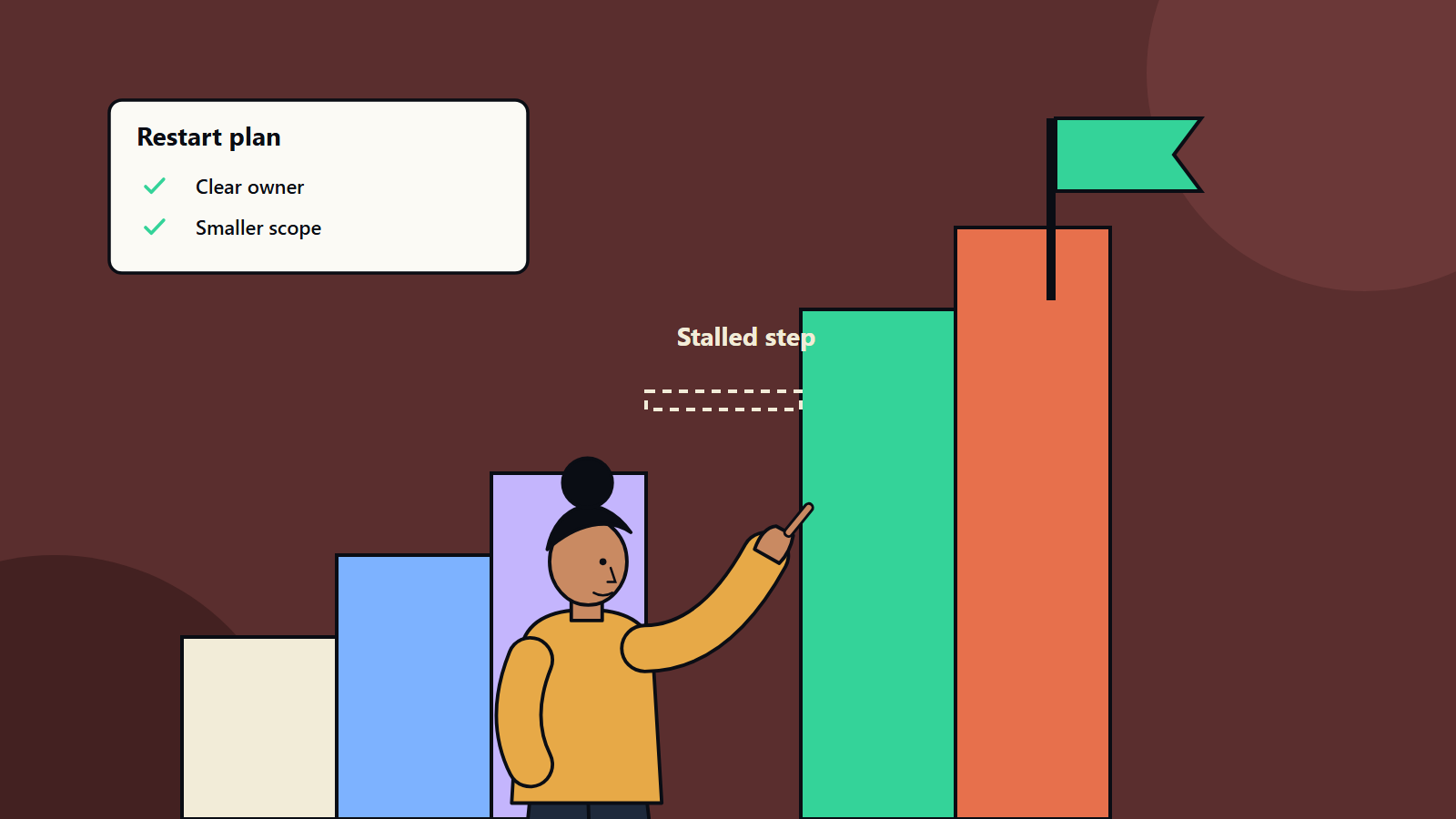
Short on time? Programmes stall when goals are vague, ownership is split, scope grows, people are not brought along and benefits are not tracked. To restart, reset the goal in one sentence, name a single accountable owner, cut scope to the next deliverable that proves value, and report progress in outcomes everyone understands.
Digital transformation programmes begin with energy and a bold vision. A year later, many sit in a familiar place: milestones slipping, budget used up, teams tired and sponsors asking what has been delivered. A stall can be reversed with a deliberate response.
This guide describes the most common reasons programmes lose momentum and sets out a practical way to restart. The advice suits a mid-sized company modernising its operations as much as a large organisation with a multi-year portfolio.
Key takeaways
- Stalls usually have organisational causes as often as technical ones: unclear goals, split ownership, weak change management and unmanaged scope.
- Diagnose before you act. Interviews, delivery data and a look at the benefits case reveal where the programme is stuck.
- Restart with a smaller, outcome-focused plan and visible early wins.
- Give one executive clear accountability and decision rights.
- Track benefits as carefully as cost and schedule.
Why programmes stall
1. The goal was never specific
“Become digital” or “modernise the business” gives teams nothing to aim at. Without clear outcomes such as faster onboarding, lower cost to serve or a new revenue stream, every request looks equally important and priorities drift.
2. Ownership is shared, so nobody owns it
When IT, operations and the business each hold part of the programme, decisions wait for committees. Dependencies between workstreams go unmanaged, and nobody can trade scope against time.
3. Scope grows quietly
Each stakeholder adds a feature or a system. The plan balloons, delivery dates move out and the first release arrives too late to build credibility.
4. Technology comes before process
Installing a platform does not change how work happens. Old processes get copied into new tools, and benefits never appear.
5. People are not brought along
Staff who were not consulted may resist or work around new systems. Training arrives late. Managers keep measuring the old way. Adoption stays low, and the business case weakens.
6. Legacy complexity is underestimated
Hidden dependencies, poor data and undocumented behaviour in older systems slow every step. Estimates made early prove too low.
7. Funding and governance are rigid
Annual budgets and stage gates built for predictable projects struggle with learning-based work. Teams spend more time on reporting than on delivery.
8. Benefits are not tracked
If nobody measures results, leaders see only cost and delay. Support fades even when value is arriving.
9. Skills are missing
Programmes need product management, architecture, data, security and change expertise. Gaps lead to rework or to heavy dependence on outside parties.
10. Leadership attention moves on
A sponsor changes role, priorities shift and the programme loses its champion.
Diagnose before you restart
Spend two to three weeks on a short, honest review:
- Interview sponsors, programme staff, operations and a sample of users.
- Examine delivery data: planned versus actual dates, defect trends, backlog age and team capacity.
- Revisit the business case: what outcomes were promised, which are still valid and which have changed?
- Map dependencies between workstreams, systems and teams.
- Assess adoption: where are the new tools used, and where are they bypassed?
- Review governance: who decides what, and how long does it take?
Summarise the findings in plain language and share them with the steering group.
Restart in six steps
- Reset the goal. Write a one-sentence outcome and two or three measures. Confirm that sponsors agree.
- Name one accountable owner with authority over scope, budget and priorities.
- Shrink the scope. Pick the smallest deliverable that proves value, such as one service, one region or one customer group. Park everything else visibly.
- Organise around products or journeys. Form teams that include business, design, engineering and operations, and give them clear outcomes.
- Deliver in short cycles. Release something real every few weeks, and show it to users.
- Report benefits. Share a one-page summary monthly: outcomes achieved, adoption, spend, risks and next steps.
Reconnect with the people
- Explain the reasons for the change as well as the schedule.
- Involve frontline staff in design and testing.
- Train in the context of daily work, close to go-live.
- Name champions in each team.
- Adjust incentives and performance measures, so they match the new way of working.
- Listen to feedback and show what changed as a result.
Adjust governance
Replace long review cycles with lighter checks. Agree decision rights and limits in advance, so teams can act within them. Fund by outcomes and learning, with regular reviews of progress, and be ready to stop work that is not delivering.
Manage legacy realistically
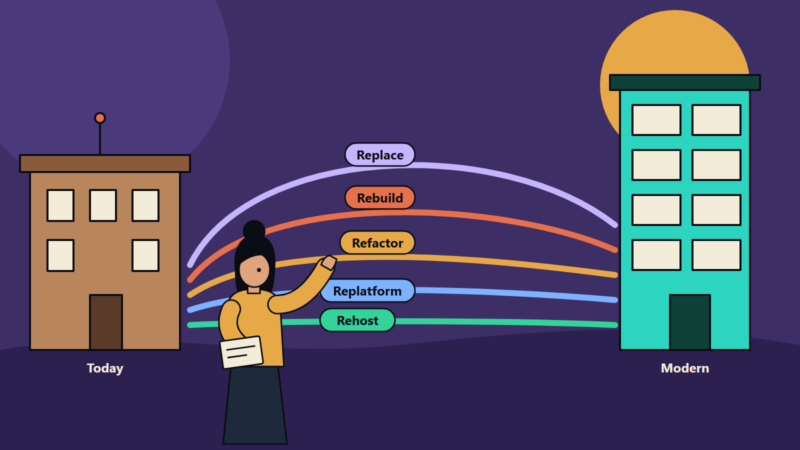
Break modernisation into slices, protect operations while you change them and keep a visible register of technical risk. Our article on legacy application modernization describes common paths and how to choose among them.
Warning signs to watch
- Status reports full of activity but short on outcomes.
- Milestones moved repeatedly.
- Key people leaving or stretched across too many tasks.
- Users working outside the new system.
- Decisions escalated again and again.
- A benefits case that no one has looked at for months.
When to stop
Sometimes the right call is to stop or reshape a programme. If the original problem has disappeared, if the cost now outweighs the benefit or if a different approach would deliver faster, say so. Ending a weak programme releases funds and people for better work.
How SoftSapien supports programme recovery
SoftSapien works with leadership teams to review stalled programmes, reset objectives and deliver in manageable stages, drawing on engineering, design and change expertise. See our business transformation services and our business advisory consulting.
If your programme needs a fresh look, contact us through the contact page. You can chat with our team, send a message or schedule a free consultation call.
Frequently asked questions
Why do digital transformation programmes stall?
Common causes include vague goals, split ownership, growing scope, technology before process, weak change management, legacy complexity, rigid funding, untracked benefits, skills gaps and lost sponsor attention.
How do I diagnose a stalled programme?
Interview sponsors, staff and users, examine delivery data, revisit the business case, map dependencies, assess adoption and review governance.
How should a programme restart?
Reset the goal in one sentence, name one accountable owner, shrink scope to a deliverable that proves value, organise around journeys, deliver in short cycles and report benefits monthly.
When should a programme be stopped?
When the original problem has gone, when cost outweighs benefit or when a different approach would deliver faster. Stopping frees funds and people for better work.
Can SoftSapien review a programme?
Yes, with an independent view and delivery support. Contact SoftSapien through the contact page to chat with our team, send a message or schedule a free consultation call.