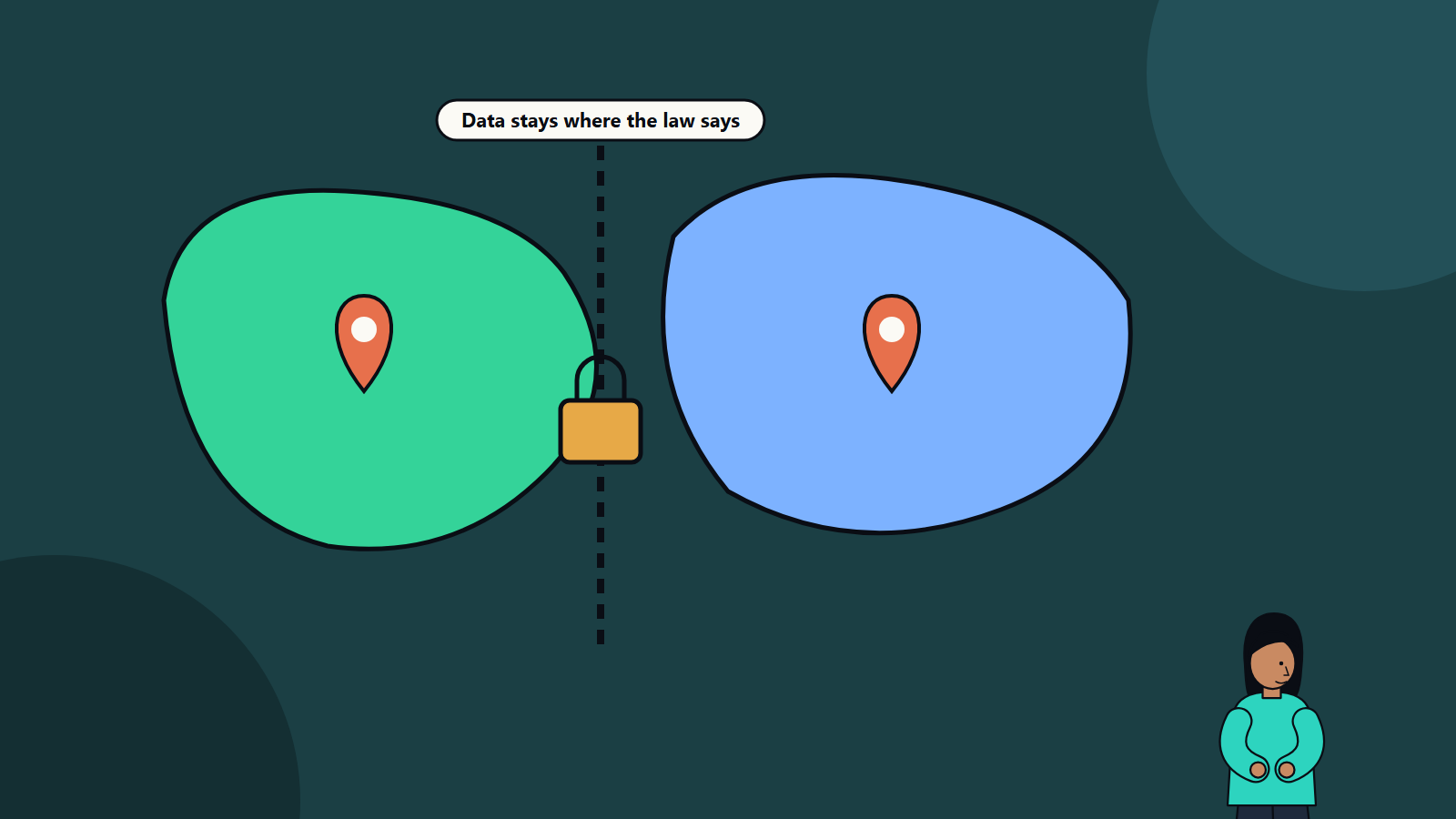
Short on time? Data residency is about where data is stored and processed. Data sovereignty concerns which country’s laws and authorities can reach it. Map your data and the rules that apply by country, choose cloud regions and providers to match, control keys and access, document transfers and revisit the plan as laws change. Seek legal advice for each jurisdiction.
A customer in Germany asks where their data is held. A hospital group needs patient records to stay within national borders. A bank must show regulators who can access its systems. As businesses move to the cloud and serve customers across regions, the physical and legal location of data has become a daily design question.
This guide explains the key terms, the kinds of rules that apply and how to choose cloud regions and controls. It gives practical direction for a small company with customers in two countries and a multinational with obligations in dozens. It offers general information, and you should take legal advice for your situation. Laws differ widely and change often.
Key takeaways
- Residency concerns the location of storage and processing. Sovereignty concerns the legal control that applies to the data and to the provider.
- Rules vary by country and sector, and cover personal data, financial data, health data, public sector data and more.
- Region choice is one control. Encryption, key management, access control and contracts matter too.
- Cross-border transfers need a lawful mechanism in many regimes.
- Document where data lives, and keep the map current.
Key terms
- Data residency: the physical or geographic location where data is stored and processed.
- Data localisation: a legal requirement to keep certain data inside a country or region.
- Data sovereignty: the idea that data is subject to the laws and governance of the country where it is located, or of the entity that controls it. Debates include whether foreign laws can compel a provider to hand over data held elsewhere.
- Digital sovereignty: broader control over digital infrastructure, technology and data by a state or organisation.
- Cross-border transfer: moving or making data accessible from another country, including remote access by support staff.
Types of rules you may meet
Personal data protection
Many countries regulate personal data. The EU’s General Data Protection Regulation, Regulation (EU) 2016/679, has a chapter on transfers of personal data to third countries and international organisations, and sets conditions such as adequacy decisions and safeguards. Other jurisdictions have their own laws with different transfer rules, and some require local storage for specific data.
Sector rules
- Financial services: regulators often set expectations for outsourcing, resilience, audit rights and data location.
- Health: patient data may have to stay in country or be handled under specific frameworks.
- Public sector and defence: government data may require domestic or accredited providers, with security clearances for staff.
- Telecommunications and critical infrastructure: extra duties on data and operations.
- Education and children’s data: special protections.
Contracts and customers
Customers may require data to stay in a region, even when no law does. Contracts may include restrictions on subcontractors, locations and support access.
Government access
Laws in some countries allow authorities to request data from companies that operate there, even for data stored abroad. Understand these rules when choosing providers and structures.
Know your data
You cannot control what you have not mapped. Build a data inventory:
- What data you hold: personal, financial, health, intellectual property and so on.
- Where it is stored, processed and backed up, including logs, analytics and test environments.
- Who can access it, including support teams and subprocessors, and from where.
- Which laws and contracts apply to each category.
- Retention and deletion rules.
Classify data by sensitivity and by rules, and tag it so tools can enforce policies.
Choosing cloud regions
- Check provider coverage. Major providers publish region lists and describe which services are available in each. New services may arrive in some regions later.
- Match data location to rules, and note where backups and disaster recovery copies are held. A recovery site in another country may break a residency rule.
- Consider latency and cost. Closer regions usually perform better, and prices differ by region.
- Check resilience: availability zones, paired regions and how failover is handled.
- Review provider commitments: contractual terms on data location, subprocessors, support access and government requests.
- Look at sovereign or local options: some providers and local operators offer cloud services built to address specific national requirements, with local operation and staffing.
Controls beyond location
Location alone does not determine who can read data. Combine it with:
- Encryption at rest and in transit.
- Key management: control your own keys, in a key service or hardware module, with options for keys held in your region or outside the provider’s control. Understand how a key arrangement affects provider access.
- Access controls: least privilege, strong authentication, logging and approval for administrators.
- Confidential computing and similar technologies that protect data in use, where suitable.
- Pseudonymisation and minimisation: keep personal identifiers separate and reduce what you collect.
- Remote access rules: decide who can reach data from other countries, such as support engineers, and under what conditions.
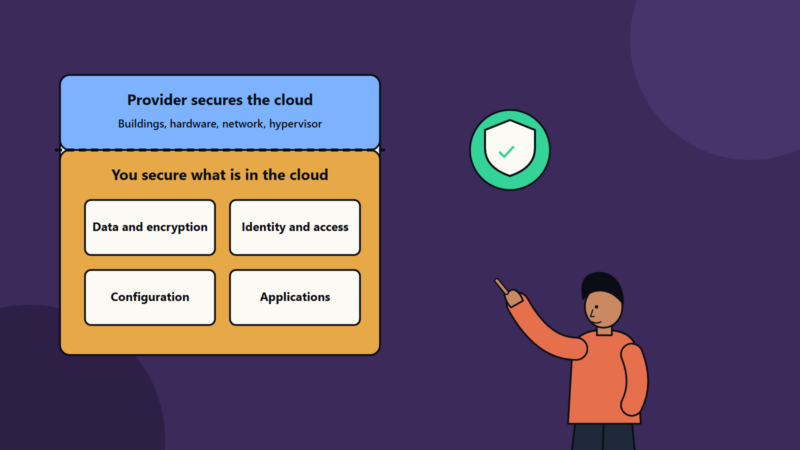
Our guide to cloud security and the shared responsibility model explains the customer side of these controls.
Cross-border transfers
Where data crosses borders, identify the legal basis and safeguards required in each regime. Common mechanisms in various systems include adequacy decisions, standard contractual clauses, binding corporate rules, certification schemes and explicit consent in limited cases. Record each transfer, assess risks and update agreements with providers and group companies. Rules and court decisions evolve, so review them periodically.
Architecture patterns
- Regional stacks: separate deployments per region, with data staying in each. Simple to explain to regulators, higher to operate.
- Central application, regional data stores: global services with data partitioned by region.
- Tokenisation: store sensitive values locally and use tokens elsewhere.
- Edge processing: process data locally and send only aggregated or anonymised results.
- Hybrid and multi-cloud: place workloads by rules and need. See our articles on hybrid cloud architecture and multi-cloud strategy.
Design analytics and machine learning with residency in mind, since training data and logs can carry personal data across borders.
Governance
- Name an owner for data location policy, working with legal, security and engineering.
- Add residency checks to architecture reviews and procurement.
- Use policy as code and cloud guardrails to block deployment into unapproved regions.
- Audit regularly, and keep evidence.
- Prepare for regulator and customer questions with clear documentation.
- Plan for change: laws, provider offerings and customer demands shift.
Common mistakes
- Treating the primary region as the whole story and forgetting backups, logs and support access.
- Assuming a provider’s regional label answers legal questions on access.
- Ignoring SaaS tools that move data to other countries.
- Copying production data into test environments in other regions.
- No inventory.
- One-off compliance with no ongoing review.
A starting plan
- Inventory data and map it against rules.
- Decide the location and control requirements for each category.
- Choose regions and providers that meet them.
- Implement guardrails, encryption and key management.
- Document transfers and provider commitments.
- Review every six to twelve months.
How SoftSapien supports regional compliance
SoftSapien helps organisations map data and design regional architectures, choose cloud regions, implement controls and prepare evidence for audits, working with your legal advisers on jurisdiction-specific questions. See our cloud and datacenter solutions and cybersecurity consulting services.
To plan your regional approach, visit the contact page to chat with our team, send a message or schedule a free consultation call.
Frequently asked questions
What is the difference between data residency and data sovereignty?
Residency concerns where data is stored and processed. Sovereignty concerns which country's laws and authorities apply to it, and to the entity that controls it.
Is choosing a cloud region enough to comply?
No. Combine region choice with encryption, key management, access controls, rules for remote support access and contracts, and check backups, logs and subprocessors.
Are cross-border transfers allowed?
Often with a lawful mechanism. Regimes such as the GDPR set conditions for transfers of personal data, and other countries have their own rules, so take legal advice.
How do I start?
Inventory data and map it against rules, set location and control requirements per category, choose regions and providers, add guardrails and document transfers.
Can SoftSapien help design regional architectures?
Yes, working with your legal advisers. Contact SoftSapien through the contact page to chat with our team, send a message or schedule a free consultation call.