Short on time? Platform engineering builds an internal platform that gives development teams self-service access to the tools, environments and guardrails they need, so they ship faster with less cognitive load. Treat the platform as a product for internal users: start with the most common pain, offer golden paths, measure adoption and developer satisfaction and avoid mandating a platform that people do not want.
As software organisations grow, each team ends up solving the same infrastructure problems: how to create an environment, set up a pipeline, manage secrets, deploy safely, monitor and stay compliant. Some teams do it well. Others reinvent it badly. Developers spend more time on tooling than on features, and operations teams drown in requests.
Platform engineering answers this by creating a shared internal platform, built and run by a dedicated team, that packages these capabilities for application teams to use on demand. This guide explains the idea, what a good platform contains, how to build and run one and what to watch for. It suits a growing company that has outgrown ad hoc tooling and an enterprise with dozens of teams.
Key takeaways
- An internal developer platform provides self-service capabilities with sensible defaults, built around the needs of its users.
- The central idea is platform as a product: user research, a roadmap, documentation, support and measurement.
- Golden paths are well-supported routes for common tasks that make the right way the easy way.
- Success is measured by adoption, developer experience and delivery outcomes. Top-down mandates alone cause resistance.
- Start small with a few widely needed capabilities and a group of willing teams.
What it is
The Cloud Native Computing Foundation’s Platforms white paper defines an internal platform as an integrated collection of capabilities defined and presented according to the needs of the platform’s users. It gathers cloud-native capabilities and services for an organisation’s own teams and presents them consistently. A platform can start small, with consistent access to individual services, and mature into self-service templates for scenarios such as web development or machine learning operations. Platform teams usually focus on interfaces and user experience, and rely on managed providers or infrastructure teams for the underlying services.
In short: a product, built by one team, for other teams, to make delivery easier and safer.
The problem it solves
- Cognitive load: developers must master too many tools, clouds and processes.
- Ticket queues: waiting days for environments, access or approvals.
- Inconsistency: every team has its own pipeline, security setup and monitoring.
- Duplicated effort: many teams solving the same problem.
- Security and compliance gaps: controls applied unevenly.
- Slow onboarding: new engineers take weeks to become productive.
- Operational risk: fragile, hand-built setups.
What a platform typically offers
The exact mix depends on your needs. Common capabilities:
- Self-service environments: create a development, test or production environment from a template in minutes. Our guide to infrastructure as code describes the foundation.
- Delivery pipelines: standard build, test, security scan and deploy workflows. See our CI/CD starter pipeline.
- Runtime platform: container orchestration, serverless or managed application hosting, with sensible defaults. Our guides to Kubernetes for decision makers and serverless or containers discuss options.
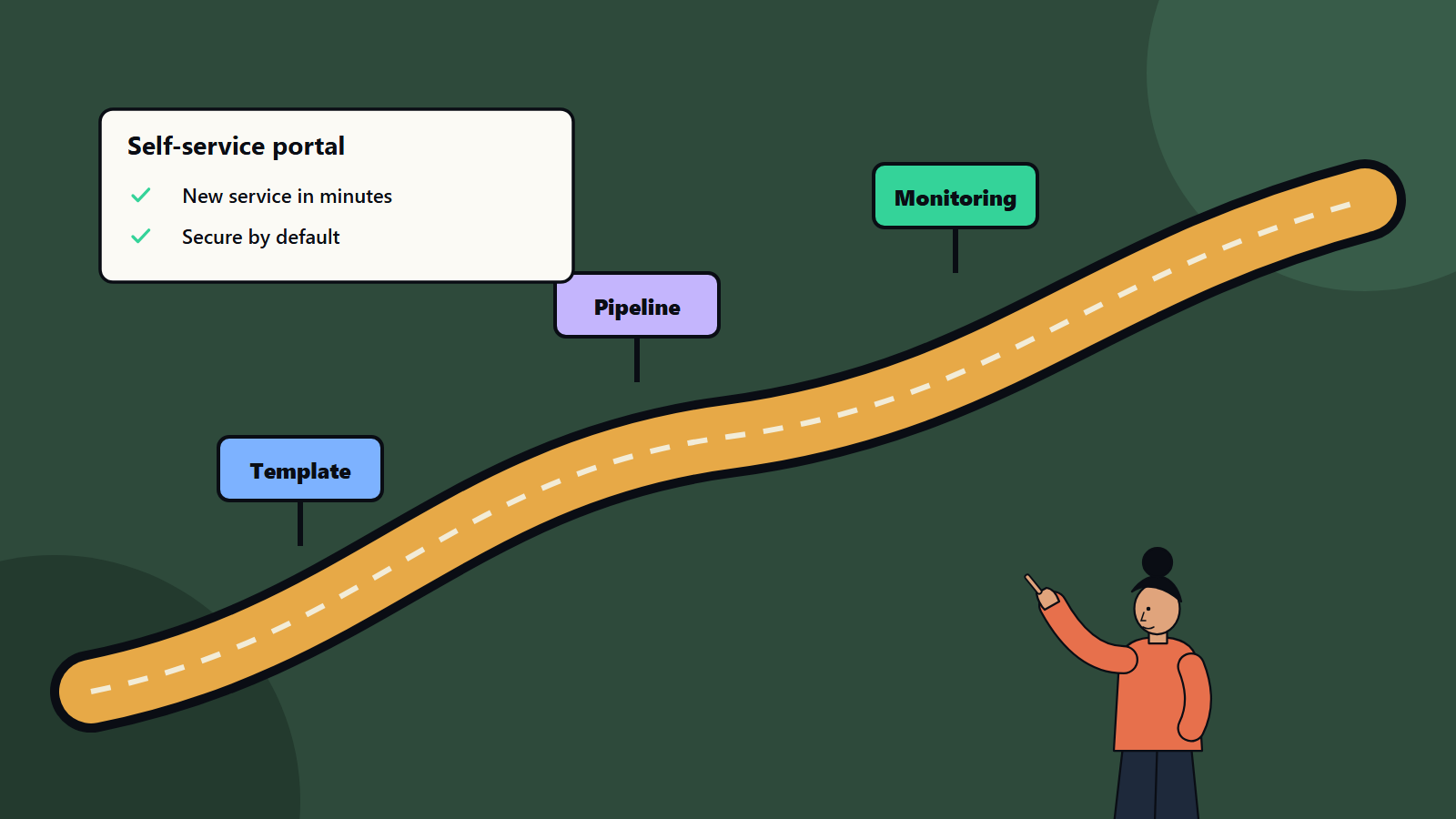
- Service catalogue and templates: scaffolding for new services with logging, monitoring, authentication and pipelines built in.
- Observability: logs, metrics, traces and dashboards ready for each service. See our guide to observability.
- Secrets and configuration management.
- Security and compliance guardrails: policy as code, scanning, software bill of materials generation and audit trails. See our article on software supply chain security.
- Data and machine learning services: databases, queues, feature stores and model deployment tools.
- Developer portal: a front door with documentation, a catalogue of services and owners, scorecards and links to tools.
- Cost visibility: spend by team and service, supporting good habits. Our cloud cost optimization checklist fits here.
The white paper’s key attributes
The CNCF paper lists attributes of a good platform:
- Product orientation: designed around user requirements, with common use cases prioritised.
- Consistent user experience: offered through portals, interfaces, command-line tools and editors to suit different users.
- Documentation and onboarding: clear guides and starter templates, often bundled as golden paths.
- Self-service: users obtain capabilities on demand with minimal manual intervention.
- Reduced cognitive load: implementation details and operational burden are hidden from product teams.
- Optional and composable: teams can use only the parts they need or supply their own capabilities.
- Secure by default: security and compliance rules are built in according to organisational standards.
Golden paths
A golden path is a supported, documented and automated way to do a common task, such as create a new web service with a database, pipeline, monitoring and security checks. It is not compulsory: teams with unusual needs may leave the path, accepting more responsibility. Golden paths work because they are the easiest option, with good defaults.
Platform as a product
The paper’s central idea is that a platform should be run like a product, since its success depends on its users’ success. Practical implications:
- Know your users: interview application teams, observe their work, survey satisfaction and study usage data.
- Prioritise problems: start with widely needed capabilities that are undifferentiated, such as environments and pipelines.
- Build a roadmap with input from users, and publish it.
- Involve early adopters: a small group of engaged teams gives feedback and later champions the platform.
- Provide support: a channel for questions, an on-call route for platform incidents and clear service levels.
- Document and market: guides, examples, demos and release notes. A platform nobody knows about will not be used.
- Avoid pure mandates: top-down adoption orders often cause resistance, according to the paper. Earn adoption by solving real problems, and use standards and policy where genuinely required.
- Show impact: leadership support depends on evidence that the platform improves delivery.
Team and roles
A platform team typically includes platform engineers, a product manager or owner, a designer or developer experience specialist, reliability and security expertise and technical writing support. The team’s work is enabling others, so empathy and communication matter as much as technical skill. Models such as team topologies describe how platform teams interact with stream-aligned product teams: as a service provider, with collaboration at the start and clear interfaces later.
Measure success
- Adoption: share of teams and services using platform capabilities.
- Developer experience: satisfaction surveys and qualitative feedback, time to first deployment for a new engineer or service.
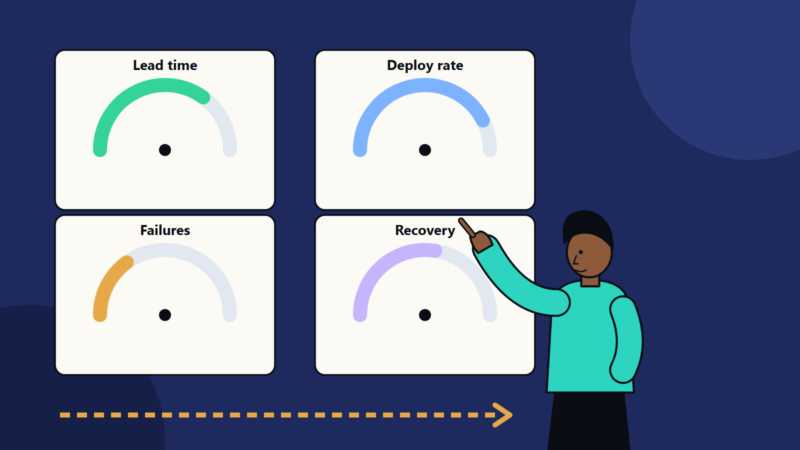
- Delivery performance: lead time, deployment frequency, change failure rate and recovery time. Our guide to DORA delivery metrics explains these measures and how to use them without gaming.
- Reliability and security outcomes: incidents, vulnerabilities and audit findings.
- Efficiency: tickets avoided, time saved and cost per service.
- Platform health: uptime, support response time and backlog of requests.
Getting started
- Find the pain: interview teams, and list the top five frustrations.
- Define a thin platform: one or two capabilities that solve the biggest pain, such as a standard pipeline and environment template.
- Pick pilot teams: two or three willing teams with real needs.
- Build, test and iterate: release early, and gather feedback.
- Document and support: write the getting-started guide, and offer help.
- Show results: share before and after measures.
- Expand deliberately: add capabilities in response to demand, and retire unused ones.
- Establish governance: ownership, standards for contributions and a process for managing change.
Build, buy or assemble
Options include assembling open source components, adopting commercial developer portal and platform products, using cloud provider platform services or a mix. Consider fit with your stack, team skills, total cost, extensibility and lock-in. Most organisations assemble a platform from existing tools, with a thin integration and experience layer on top. Avoid building bespoke versions of capabilities available as reliable services.
Common mistakes
- Building a platform without talking to users.
- Treating it as an infrastructure project with no product management.
- Making it mandatory before it is good.
- Trying to cover everything at once.
- No documentation or support.
- Ignoring security and compliance needs.
- No metrics, so value cannot be shown.
- Underinvesting after launch, so the platform decays.
- Becoming a bottleneck by centralising decisions.
How SoftSapien supports platform engineering
SoftSapien helps organisations design and build internal platforms, from pipelines and environments to developer portals and guardrails, using a product approach with your teams. See our DevOps and enterprise software engineering services.
To discuss your platform, use the contact page to chat with our team, send a message or schedule a free consultation call.
Frequently asked questions
What is an internal developer platform?
An integrated collection of capabilities presented according to the needs of its users, giving development teams self-service access to environments, pipelines and guardrails.
What is a golden path?
A supported, documented and automated way to do a common task, such as creating a new service, which makes the right way the easy way without being compulsory.
Why treat the platform as a product?
Its success depends on its users. Product practices such as research, roadmaps, documentation, support and measurement earn adoption, while top-down mandates often cause resistance.
How do I measure a platform?
Adoption, developer satisfaction, time to first deployment, delivery metrics, reliability and security outcomes, efficiency and platform health.
Can SoftSapien help build a platform?
Yes, using a product approach. Contact SoftSapien through the contact page to chat with our team, send a message or schedule a free consultation call.