Short on time? B2B link building means earning links from relevant, trusted sites by publishing things worth linking to: original data, useful tools, clear explainers and expert commentary. Google treats links made mainly to manipulate rankings as spam, including paid links that pass ranking credit. Build real relationships, make pages easy to link to and measure leads as well as links.
Every technology firm wants more links to its site. Links help people find you and help search engines understand which pages matter. They are also the area where shortcuts do the most damage: bought links, link swaps and automated tools can lead to lower rankings or removal from results.
This article is a plain approach to B2B link building that holds up over time. It suits a small agency with a modest budget and a global provider with a communications team. It sits beside our articles on keyword research for B2B technology services and digital PR with original data.
Key takeaways
- Earn links with content and relationships that give others a reason to link.
- Google’s spam policies name buying or selling links for ranking, heavy link exchanges and automated link generation as link spam.
- Paid or sponsored links are fine when marked with rel=”sponsored” or rel=”nofollow”.
- Make links possible: pages need crawlable links with clear anchor text.
- Judge success by relevant referrals, mentions and enquiries, since raw counts mislead.
What Google says
Google’s spam policies describe link spam as creating links to or from a site mainly to manipulate search rankings. Examples include buying or selling links for ranking, whether for money or for goods or services, heavy reciprocal linking and partner pages built only to cross-link, automated tools that generate links, and low-quality directory links. Paid links are acceptable when they carry a rel=”nofollow” or rel=”sponsored” attribute. Google adds that sites in breach may rank lower or not appear in results, and that violations are found by automated systems and by human review.
Google’s page on crawlable links explains the technical side. Links should be anchor elements with an href attribute. Descriptive anchor text helps, and empty or generic text like “click here” gives little context. Every page you want indexed should have at least one internal link pointing to it, and the rel values nofollow, sponsored and ugc exist for links you do not vouch for, paid links and user-generated links.
Google’s guidance on helpful, reliable, people-first content sets the bar for what is worth linking to: original, thorough, clearly sourced and written for people.
Why people link in B2B link building
Think about the person who adds a link. They do it because:
- You gave them a fact they can cite.
- You made a tool or template that helps their readers.
- You explained something better than anyone else.
- You are part of a story, an event or a community they cover.
- You are a trusted partner, customer or supplier.
- You asked a fair question and offered something of value.
Build for those reasons.
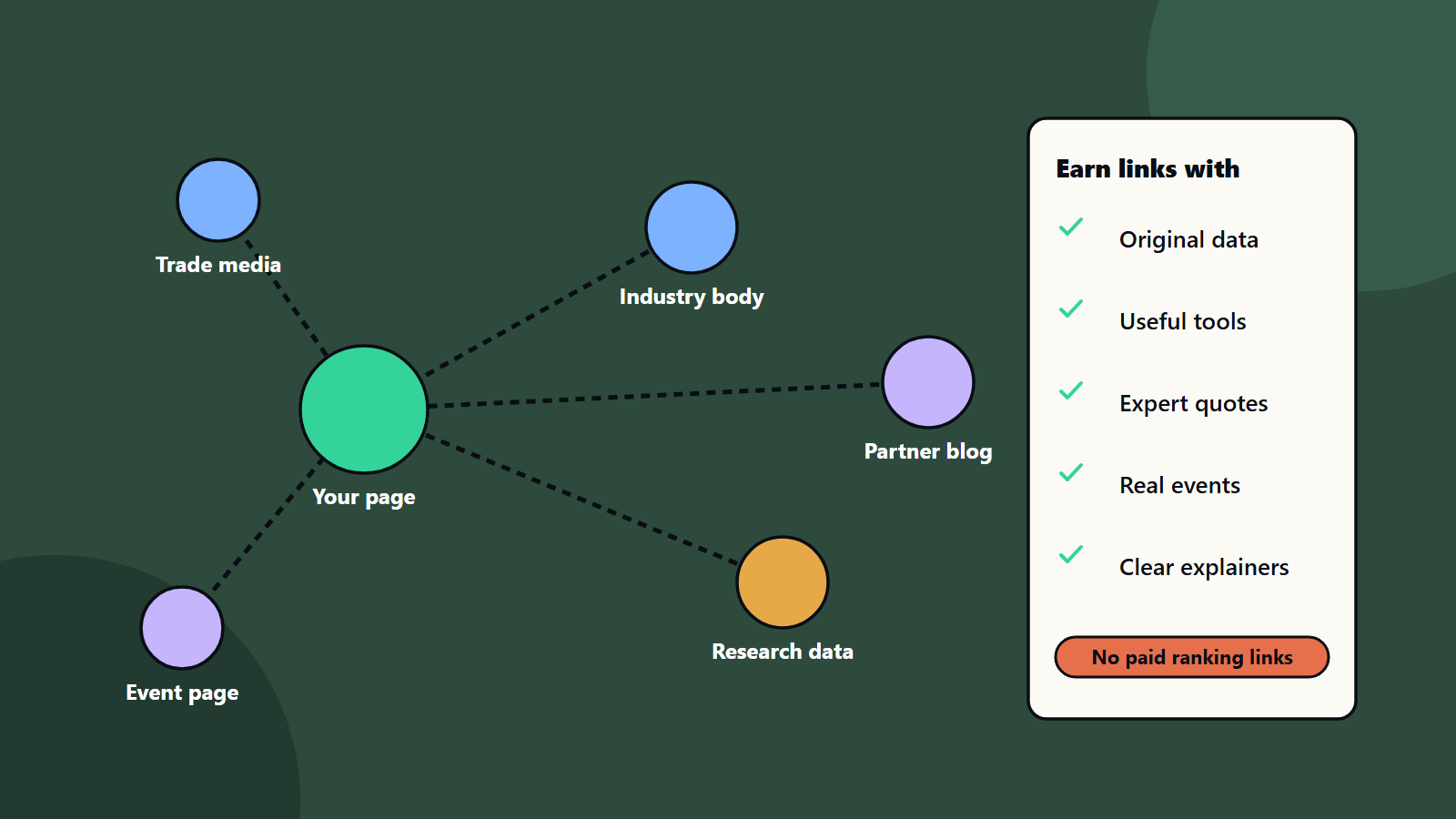
Link-worthy assets for technology firms
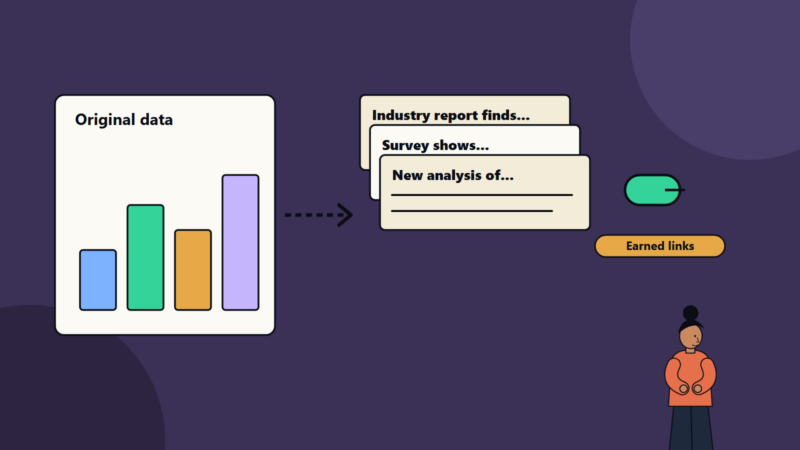
- Original data: a survey, benchmark or analysis. Be open about method and limits.
- Tools: calculators, checklists, templates and diagnostic tools.
- Explainers: thorough pages on hard topics, with clear diagrams.
- Standards summaries: plain summaries of rules and frameworks, linked to the primary source.
- Open source or code samples, where you can share them.
- Expert commentary: quotes and analysis for journalists, with named, qualified experts.
- Events and talks: pages that list agendas, speakers and recordings.
- Case studies: with permission and evidence. See case studies that win technical buyers.
A worked example: a cloud migration provider
This example is illustrative.
A provider wants links from industry bodies, trade media and partner sites.
Step 1: pick an asset. The team builds a free “cloud migration readiness checklist” with a worksheet, based on public frameworks and its own project experience. It cites primary sources, and it avoids invented statistics.
Step 2: make it linkable. A clean page with a clear title, a short summary, a downloadable file and a stable address. Internal links from the service page and related guides.
Step 3: find the right people. A list of thirty relevant sites: industry associations with resource pages, trade publications that cover migration, university courses and partner blogs.
Step 4: reach out with value. A short, personal note: who they are writing for, what the checklist offers, how it differs from what they list now and an offer to adapt it. No pressure, no payment for links.
Step 5: follow up and learn. The team notes who replied, which angle worked and what questions came back, and improves the asset.
Result to look for: a few relevant links, referral visits from readers who care and conversations with potential customers. If the asset is weak, outreach will not fix it.
Outreach habits that work
- Research the person and their content before you write.
- Explain why your page helps their audience.
- Keep it short, polite and specific.
- Offer something useful, such as a quote or an updated stat.
- Say thank you, and share their work in return.
- Respect “no”.
Habits to avoid
- Buying links that pass ranking credit.
- Link swaps arranged only to exchange links.
- Mass-produced guest posts with keyword-stuffed anchors.
- Fake profiles, comments and directories.
- Using automated tools to create links.
- Claiming results you cannot support.
Mark any paid placement, sponsorship or affiliate link with the proper attribute, and disclose it to readers as the law in your region requires.
Do the technical basics
- Make sure pages are indexable and load fast. See technical SEO checklist.
- Use descriptive anchor text on your own internal links.
- Fix broken links and redirect old addresses.
- Add structured data where it fits. See structured data and schema markup.
- Keep key pages fresh and accurate.
Measure what matters
- Referral visits from linking pages, and their engagement.
- Leads and conversations that started from linked pages.
- Mentions of your brand, with or without links.
- Rankings and impressions in Search Console for target topics.
- Quality of linking sites: relevance and trust.
Review quarterly, and drop tactics that bring only noise.
Small business and enterprise views
- Sole trader or small business: make one strong local or industry resource, list your business with real associations and ask genuine partners and customers to link where it makes sense. See local SEO for multiple locations.
- Mid-size company: run one or two research or tool projects a year with a small outreach plan.
- Enterprise: coordinate communications, product and legal teams, build a newsroom and expert programme and set rules for sponsored content and disclosure across regions. See international SEO and hreflang.
Regional and legal notes
Advertising and disclosure rules for sponsored content differ by country. Languages, local media and local associations differ too. Adapt outreach for each market, and use native speakers.
Common mistakes
- Starting with outreach before there is something worth linking to.
- Chasing counts and ignoring relevance.
- Generic emails to hundreds of sites.
- Over-optimised anchor text.
- Ignoring technical problems that block crawling.
- No follow-up or learning.
A starting plan
- Choose one asset that your buyers would use.
- Publish it on a clean, well-linked page.
- List thirty relevant sites, and write personal notes.
- Track replies and referrals for 90 days.
- Improve the asset, and repeat B2B link building with the next one.
How SoftSapien supports link building
SoftSapien’s strategists plan research and tool projects, run ethical outreach and digital PR, fix technical blockers and report on referrals and enquiries. See our search engine and AI and digital PR services.
To earn links that last, use the contact page to chat with our team, send a message or schedule a free consultation call.
Frequently asked questions
What counts as link spam?
Google lists buying or selling links for ranking, heavy reciprocal linking, automated link generation and low-quality directory links, among other practices.
Are paid links allowed?
Paid placements are acceptable when the links carry rel="sponsored" or rel="nofollow" and are disclosed as the law requires.
What content earns links?
Original data, useful tools, thorough explainers, standards summaries, expert commentary and event pages.
How do we measure success?
Look at relevant referral visits, leads from linked pages, brand mentions and rankings for target topics, not just link counts.
Can SoftSapien help with link building?
Yes, through research and digital PR. Contact SoftSapien through the contact page to chat with our team, send a message or schedule a free consultation call.