Short on time? B2B keyword research starts with the questions buyers ask at each stage, and tool volumes come second. Collect real language from sales calls and support, group terms by topic and intent, check what already ranks, judge fit and difficulty, map keywords to pages and measure results by enquiries and pipeline. Low volume terms that match buyers are often worth more than broad ones.
Search volume figures can mislead B2B teams. A term searched ten times a month by chief technology officers evaluating a platform may be worth more than one searched ten thousand times by students. Keyword research for technology services is about finding the questions your real buyers ask, and answering them better than anyone else.
This guide explains a practical process for a small agency and for a global services provider. It fits with our wider guides to content strategy for technical buyers and the technical SEO checklist.
Key takeaways
- Begin with buyer questions, roles and stages, using sources such as sales calls, support tickets and customer interviews.
- Group keywords by topic and intent: learn, compare, evaluate and buy.
- Judge each term by relevance to your services, intent, competition and your ability to add value.
- Map terms to pages, with one main topic per page and clear internal links.
- Measure outcomes in leads and pipeline, and refresh the list regularly.
Start with people
Before opening any tool, gather the language of buyers:
- Sales and discovery calls: the questions prospects ask and the words they use.
- Customer interviews: how they described the problem before they found you.
- Support tickets and community threads.
- Internal experts: what do engineers and consultants explain repeatedly?
- Competitor sites and review sites: how others describe the same services.
- Forums and social groups where your buyers talk.
Note the roles too. An engineer may search for a specific error or a protocol. A chief financial officer may search for costs and return on investment. A procurement lead may search for supplier checklists and contract terms.
Understand intent
Each query has a purpose, and your content must match it:
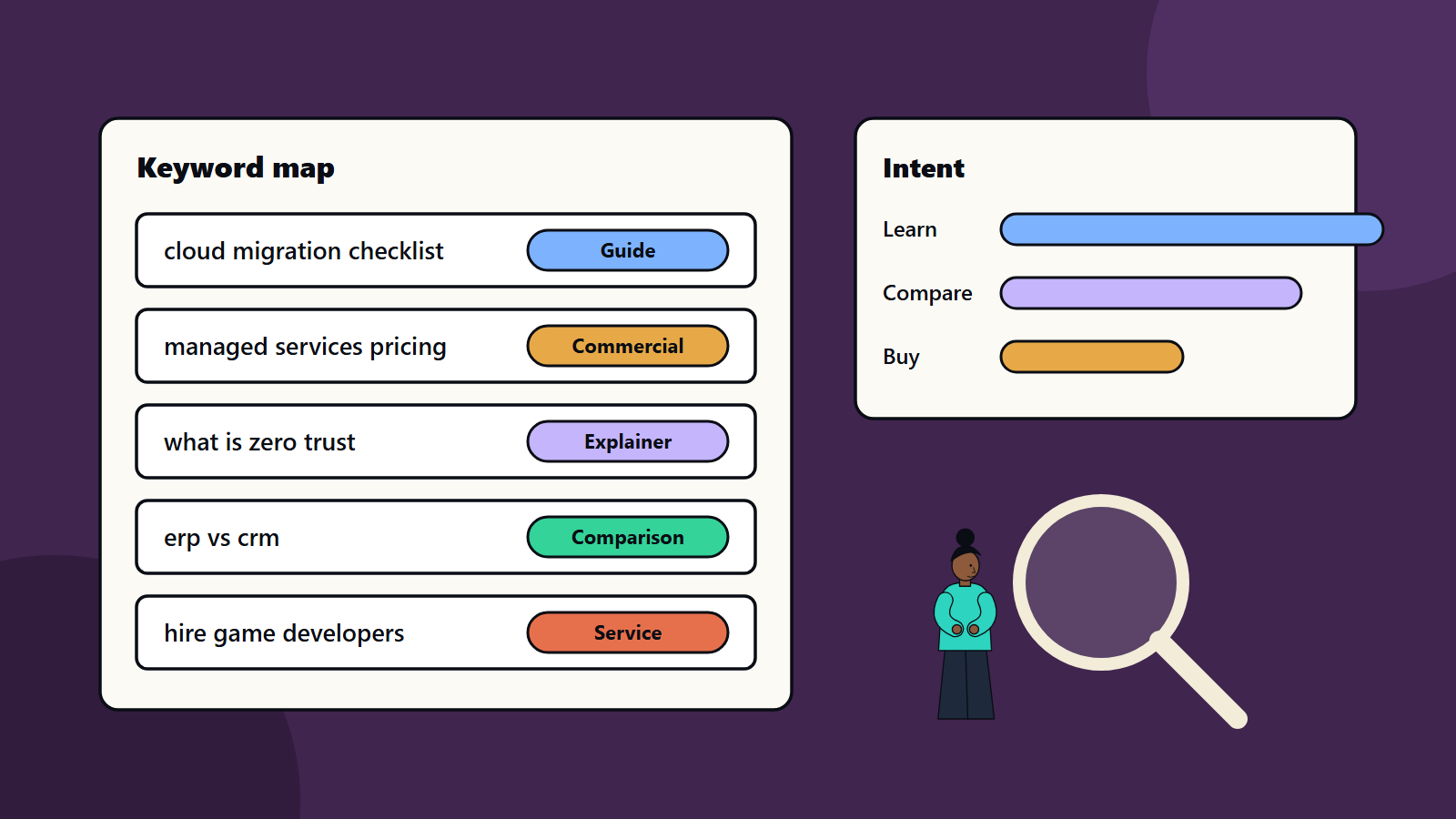
- Learn: “what is zero trust security”. Explainers and guides serve this.
- Compare: “serverless or containers”. Comparison and decision guides.
- Evaluate: “managed services contract checklist”. Detailed guides, checklists and proof.
- Buy: “cloud migration services for healthcare”. Service pages with specifics, evidence and a clear next step.
- Use: “configure single sign-on”. Documentation and how-tos for customers.
Look at the results pages themselves. If the top results are all how-to guides, a product page will struggle, and the reverse is also true.
Build the list
- Seed terms: your services, technologies, problems and industries, in buyers’ words.
- Expand with search suggestions, related searches, the “people also ask” boxes and the questions you collected.
- Use tools: Google Search Console shows what already brings visitors. Keyword tools estimate volumes and difficulty, and each tool differs, so treat numbers as rough guides.
- Check competitors: which topics do their best pages target?
- Add modifiers: industry, size, region, platform and compliance terms, since specific searches often show stronger intent.
- Include variations: spelling differences, such as optimisation and optimization, and local terms for international audiences. See international SEO and hreflang.
Group by topic
Cluster related terms under a topic that one page or a hub of pages can cover. For example, the topic “cloud migration” might include a checklist, cost, risks, timelines and industry variants. Build a hub page and supporting pages, linked together. Our own site follows this pattern, with service pages as hubs and guides such as the cloud migration checklist as support.
Judge each opportunity
Score keywords on:
- Relevance: does it match a service you sell or a problem you solve well?
- Intent: will a visitor plausibly become a lead?
- Volume: enough searches to matter. In B2B, small numbers can be fine.
- Difficulty: who ranks now, and could you realistically compete? Look at the quality of the results as well as a tool score.
- Value you can add: do you have original expertise, data or tools that existing pages lack?
- Business priority: services you want to grow.
- Trend: rising or falling interest.
Prefer a few strong, specific targets to a long list of weak ones.
Map keywords to pages
- One main topic and primary keyword per page, with related terms woven in naturally.
- Avoid several pages competing for the same query.
- Put the main keyword in the title, headings, opening text, URL and meta description where it reads naturally.
- Answer the question quickly near the top, then give depth.
- Add internal links between related pages, with descriptive link text.
- Add structured data where suitable. See structured data and schema markup.
Write for the reader first. Google advises making helpful, reliable, people-first content, and stuffing keywords does not help. Our guide to AI Overviews and search covers how this applies to newer search features, and generative engine optimization goes further.
Build a content plan
- List the topics ranked by value and effort.
- Fix existing pages that nearly rank, which is often the fastest gain.
- Create new hub and supporting pages for gaps.
- Add proof: case studies, data and expert reviews.
- Plan updates, with owners and dates.
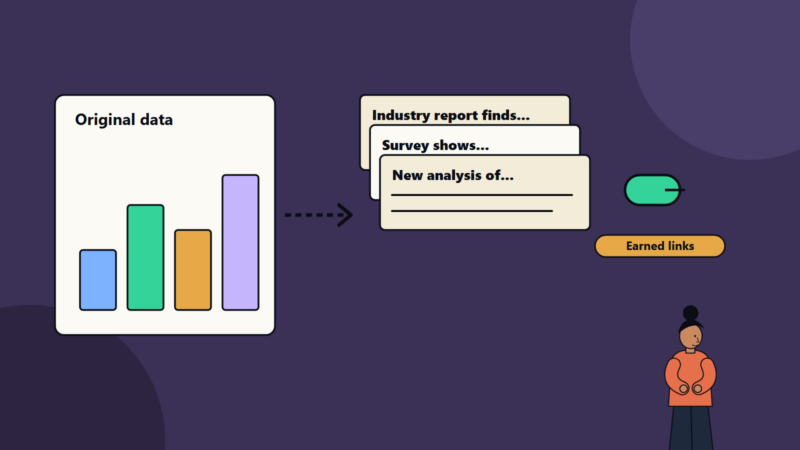
- Schedule promotion. See digital PR with original data.
Measure
- Search Console: impressions, clicks, average position and queries per page.
- Analytics: engaged visits, conversions and assisted conversions. See GA4 setup and governance.
- Pipeline: leads and opportunities that touched the pages, and what buyers say they searched.
- Ranking trends for priority keywords.
- Content health: freshness, broken links and accuracy.
Review quarterly. Drop what does not work, and invest where leads appear.
Paid and organic together
Search ads reveal which terms convert, quickly. Use the data to guide organic priorities, and use organic data to find paid opportunities. See our guide to paid search budgeting for technology firms.
Common mistakes
- Chasing the highest volume terms.
- Ignoring intent, so pages attract the wrong visitors.
- Several pages for the same query.
- Keyword stuffing.
- Skipping the results page review.
- Never refreshing the list.
- Measuring traffic and ignoring leads.
A starting plan
- Gather fifty questions from sales, support and customers.
- Group them into five to eight topics.
- Check the search results for each, and score the opportunities.
- Assign the top terms to new or improved pages.
- Track in Search Console and analytics, and review every quarter.
How SoftSapien supports search strategy
SoftSapien’s strategists research buyer language, build keyword and topic maps, plan content and track results in pipeline terms. See our search engine and AI and performance marketing services.
To plan your search content, use the contact page to chat with our team, send a message or schedule a free consultation call.
Frequently asked questions
How is B2B keyword research different?
Volumes are small and intent matters most. Start with questions from sales calls, support and interviews, and judge terms by buyer fit as well as volume.
What is search intent?
The purpose behind a query: to learn, compare, evaluate, buy or use. Match each page to the intent shown by the current results.
How many keywords should a page target?
One main topic with one primary keyword and natural related terms. Avoid several pages competing for the same query.
How do we measure success?
Use Search Console for impressions and queries, analytics for conversions and your sales system for leads and pipeline.
Can SoftSapien help with keyword strategy?
Yes, with research and content plans. Contact SoftSapien through the contact page to chat with our team, send a message or schedule a free consultation call.