Short on time? A useful game review says what you played, on what, for how long and what you found, then judges the game against its own goals and its audience. Use consistent categories, separate facts from taste, test performance and accessibility on real hardware, disclose review copies and relationships and give readers enough detail to decide. Studios can use the same structure to review their own builds.
Players read reviews to decide where to spend money and time. Studios read them to learn what people noticed. Platform holders, publishers and investors read them to judge quality. A good review respects all of those readers.
Reviewing games is harder than it looks. Games are long, interactive and different on every platform, and they change after launch with patches and updates. This guide sets out a practical method for reviewing games on mobile, PC and console, written for critics, creators and internal quality teams. Studios can adapt it to review their own builds before release.
Key takeaways
- State how you played: platform, version, settings, hours and how much of the game you finished.
- Judge the game against its own goals and audience, and explain where you disagree.
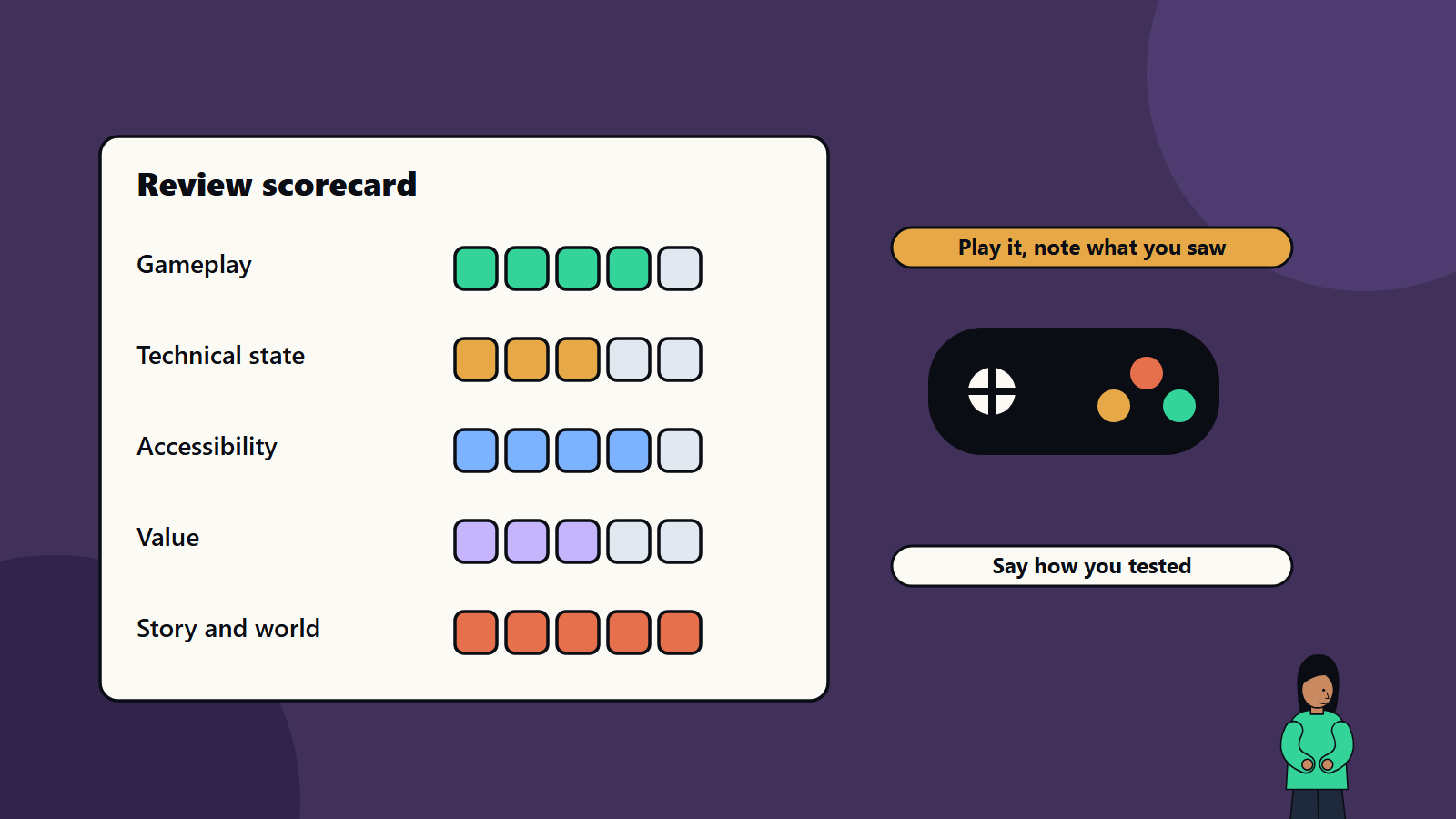
- Use consistent categories, such as gameplay, technical state, accessibility, value and presentation.
- Separate observation from opinion, and support claims with specific examples.
- Be transparent about review copies, sponsorships and updates, and revisit reviews when games change.
What a review is for
A review helps a reader decide whether a game suits them. It does that by describing the experience, assessing quality and recommending, or not, for particular kinds of players. A review is not a walkthrough, a press release or a verdict on whether the writer would enjoy a different game. Its authority comes from honesty, evidence and clarity.
Before you play
Know the game
- Read the official description, trailers and store page to see what the studio promises.
- Note the genre, target audience, price, platforms and monetisation model.
- Check version, patch level and any day-one updates.
- Learn the conventions of the genre, so you can judge innovation and execution fairly.
Prepare your setup
- Record the hardware: console model, phone and operating system, PC processor, graphics card, memory and display. Performance and bugs differ by device.
- Note settings: resolution, graphics presets, input devices and network connection.
- Decide how long you will play. Short games can be finished. Large games may need a planned share of the content, and you should say so.
- Set up capture tools for footage and performance logging, and keep notes as you go.
Check your own position
Disclose how you obtained the game and any relationships with the studio or publisher. Plan how to handle bias, such as liking or disliking a genre. Our approach is to name it and judge the game fairly within it.
While you play
Take structured notes
Track by category so the review can be written from evidence:
- Moment-to-moment play: controls, responsiveness, feedback and difficulty.
- Core loop and progression: what you do repeatedly, how rewards work and whether it stays interesting.
- Design and variety: levels, encounters, puzzles, pacing and surprises.
- Story and world, where relevant: writing, characters, tone and consistency.
- Presentation: art direction, animation, visual clarity, sound, music and voice acting.
- User interface and onboarding: how well the game teaches itself, menus and readability, especially on small screens.
- Technical state: frame rate, stability, load times, bugs, crashes, battery and heat on mobile, and online performance.
- Accessibility: options for vision, hearing, motor and cognitive needs.
- Value: content volume, replay appeal, price, and any purchases.
- Online and social features, where they exist.
Capture evidence
Screenshots, short clips and performance readings support claims. Record where problems occurred and how to reproduce them.
Test beyond the happy path
- Try different difficulty levels and play styles.
- Test interruptions on mobile, such as calls and losing connection.
- Check save and load, and suspend and resume.
- Try different input methods on PC and console.
- If the game is online, test at different times and note matchmaking and server stability.
Play enough
Judge fairly. If you did not finish, say so, and explain what you saw. If a game opens slowly and improves, or tires after ten hours, your review should reflect that, within the time you could give.
Judge fairly
Ask what the game is trying to do
A small narrative game and a competitive shooter have different aims. Assess how well each achieves its own intent for its own audience. A review can still say the intent is not appealing, as long as it separates that from execution.
Separate fact from taste
- Facts: frame rate dropped to 20 in the market area on this device. The tutorial lasts forty minutes. The game has no subtitles.
- Opinions: the combat feels satisfying. The story did not move me.
Make clear which is which, and give reasons for opinions.
Be specific
“The graphics are great” says little. “The soft lighting and bold colour palette give each region a distinct mood, and the interface stays readable on a small phone screen” says what you saw. Examples let readers judge.
Consider context
Price, platform, studio size and genre expectations matter. A small team’s first game and a flagship release from a large publisher face different standards, though a reader paying the same price deserves the same honesty.
Avoid spoilers
Warn before discussing key plot points, and keep spoilers out of headlines and summary scores.
Structure of a review
A clear structure helps readers:
- Headline and summary: the verdict in a sentence or two.
- Basics: title, platform and version played, developer and publisher, release date, price and model, play time.
- What it is: a short description without spoilers.
- What works: specific strengths with examples.
- What does not: specific weaknesses, including technical problems.
- Technical state and accessibility: a dedicated section.
- Value: who will get their money’s worth.
- Verdict: who should buy it, who should wait and what would change your mind.
- Disclosure: how you got the game and any relationships.
- Score, if you use one, with a clear scale.
Scores and recommendations
If you give scores, define the scale, for example what a three out of five means. Use categories to explain the number. Remember that a number hides nuance, so write for readers who skip to the verdict. Some critics use recommendation tiers instead, such as recommended, recommended with reservations or not recommended.
Reviewing by platform
Mobile
- Test on several device sizes and ages, if possible.
- Check download size, battery use, heat, touch controls and offline behaviour.
- Examine monetisation: pricing, ads, energy timers, random purchases and whether you can enjoy the game without paying. Platform rules require disclosure of odds for random items on major stores. Our guide to mobile game monetisation explains fair design and what to look for.
- Note interruptions and notification behaviour.
PC
- State your hardware, and test several graphics settings. Our guide to PC game optimisation explains what players and testers should look at.
- Check keyboard, mouse and controller support, rebinding, display options such as ultrawide and frame-rate caps and mod support.
- Look for crashes, shader compilation stutter and installation problems.
Console
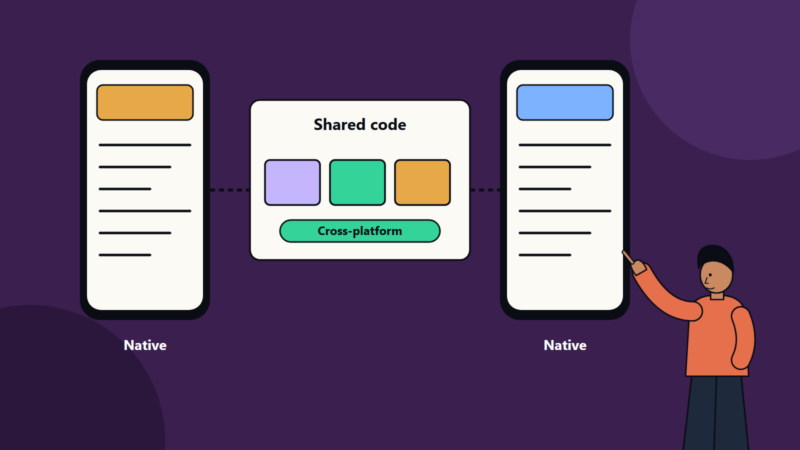
- Name the console and mode, such as performance or quality, and whether you tested on standard or enhanced hardware.
- Check load times, frame pacing, controller features, system integration and online services.
- Note any differences from other platforms, if you have seen them.
Updates and living games
Games change. A buggy launch can improve after patches, and an online game can shift with seasons and balance changes. Date your review, state the version, and consider updating it or adding a note when major changes land. Be fair to studios that fix problems quickly, and honest about issues that remain.
Ethics and transparency
- Disclose review copies, paid trips, sponsorships and personal relationships.
- Do not accept payment for scores.
- Be careful with unfinished builds, early access and embargoes, and follow agreed rules.
- Treat studios with respect. Criticise the work and avoid attacking people.
- Correct errors openly.
- Respect copyright when using footage and images.
Using the method inside a studio
Internal teams can apply the same structure to review a build before release:
- Use a review checklist across the categories above.
- Have people outside the team play with fresh eyes.
- Test on representative hardware, including low-end devices.
- Record findings, rank them by severity and track fixes.
- Compare against competitors’ games in the same genre.
- Include accessibility and monetisation checks.
Our guides to game testing and QA and game accessibility provide detail for these checks.
Common mistakes
- Reviewing after only a few minutes without saying so.
- Judging a game for what it is not.
- Ignoring technical state and accessibility.
- Vague praise or criticism.
- Hidden relationships.
- Spoilers.
- Failing to update when the game changes.
- Comparing across platforms without evidence.
A reviewer’s checklist
- Platform, version, hardware and settings noted
- Hours played and share completed stated
- Notes by category with evidence
- Technical and accessibility sections written
- Fair comparison with genre and price
- Spoilers handled
- Disclosure included
- Date and version recorded
How SoftSapien supports game quality
SoftSapien’s teams review and test games across mobile, PC and console, from internal build reviews to full quality assurance and live operations support. See our game development and QA and testing services.
To discuss a review or test programme, use the contact page to chat with our team, send a message or schedule a free consultation call.
Frequently asked questions
What should a game review include?
The platform, version and hardware, hours played and share completed, what the game is and does well, its weaknesses, technical state, accessibility, value, a verdict for specific players and a disclosure.
How long should I play before reviewing?
Enough to judge fairly for the game's length and structure. If you did not finish, say so and explain what you saw.
How should a reviewer handle updates?
Date the review, state the version and note or update it when major patches change the experience.
Can studios use this method internally?
Yes. Applying the same categories to pre-release builds, with outside players and low-end hardware, surfaces problems before launch.
Can SoftSapien test our game?
Yes, across mobile, PC and console. Contact SoftSapien through the contact page to chat with our team, send a message or schedule a free consultation call.