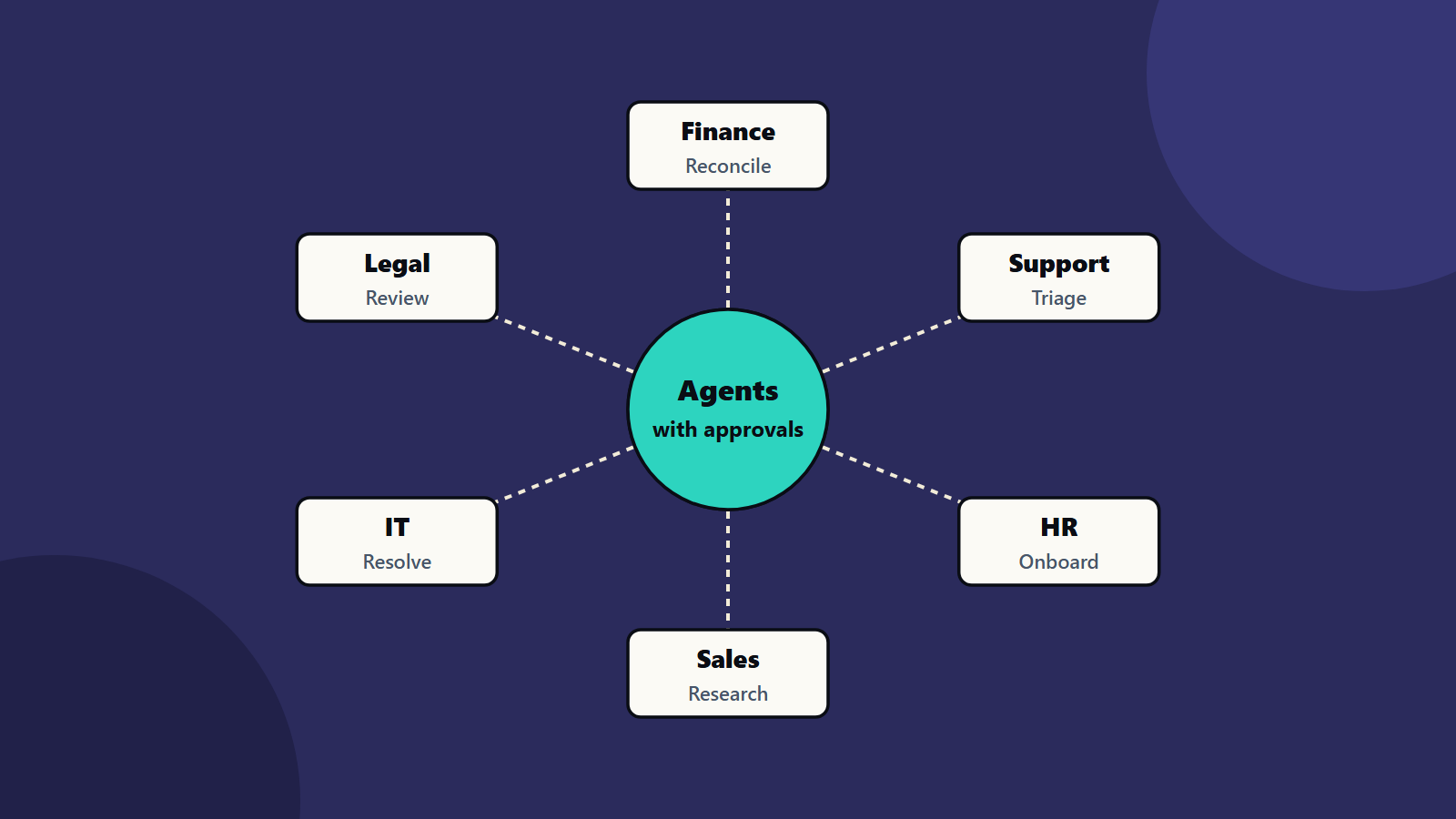
Short on time? The best AI agent use cases are repeated tasks with clear steps, good data and low risk. Finance can match invoices, support can triage tickets, HR can answer policy questions, sales can research accounts and IT can resolve routine requests. Start with one task, keep people in charge of approvals and measure results.
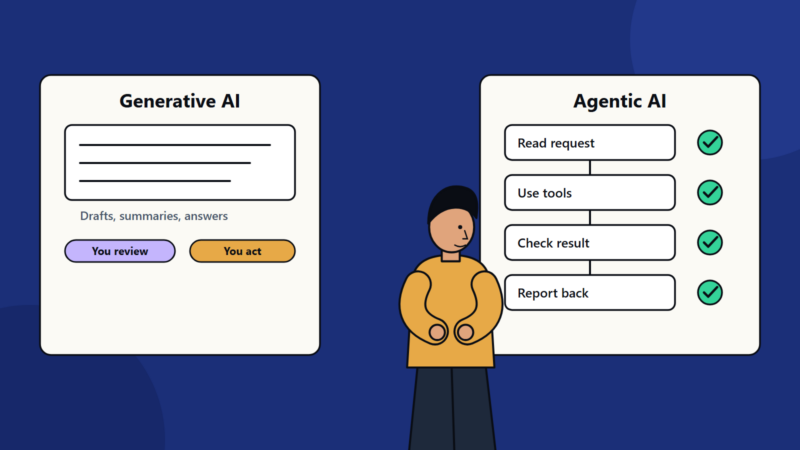
An AI agent is software that can plan a few steps, use tools and finish a task with some help. It is more than a chatbot that only answers questions. It can look up data, fill a form or draft a reply, then pass the result to a person.
This guide lists practical AI agent use cases by department. It suits a small business with one admin and a large firm with many teams. It also shows how to pick the first one.
Key takeaways
- Good candidates have clear steps, reliable data, measurable results and low risk.
- Every department has candidates, from invoice matching to ticket triage.
- Keep people in charge of money, legal and safety decisions.
- Start with one use case, test it on real cases and expand slowly.
- Governance matters: permissions, logs and review.
What makes a good use case
Look for work that is:
- Repeated: many times a week.
- Rule based: the steps are known, even if details vary.
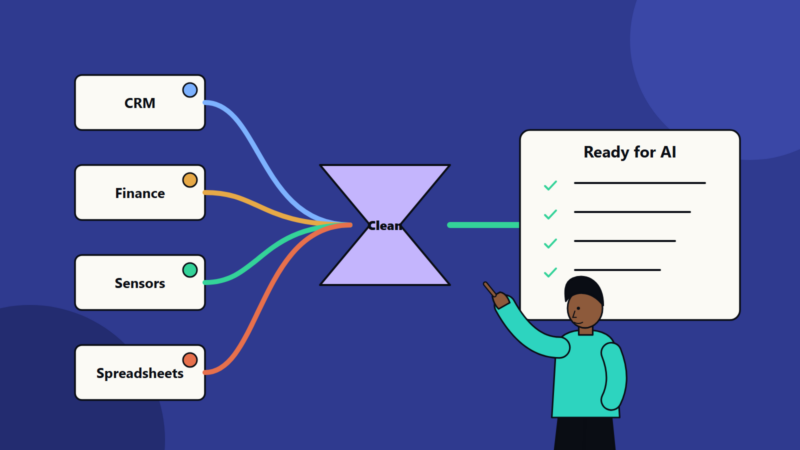
- Data rich: the facts are in systems the agent can reach.
- Checkable: a person can verify the result quickly.
- Low risk: a mistake is easy to fix.
Avoid tasks that need deep judgement, touch safety, or have no clear owner. Our guide to choosing your first AI use case gives a scoring method. The difference between generative and agentic AI is also worth reading first.
AI agent use cases by department
Finance
- Read invoices and match them to orders.
- Suggest ledger codes.
- Chase late payments with draft emails.
- Prepare first drafts of variance notes.
Customer support
- Sort and label incoming tickets.
- Draft replies from approved articles.
- Collect details before a person takes over.
- Summarise long threads.
See customer service automation.
Sales
- Research a company before a call.
- Update the customer record after meetings.
- Draft follow-up emails for review.
- Flag deals with no activity.
Marketing
- Build first drafts of briefs and reports.
- Check pages against the brand voice guide.
- Group search terms by topic.
- Prepare campaign summaries.
Human resources
- Answer policy questions from approved documents.
- Schedule interviews.
- Prepare onboarding checklists.
- Collect forms and remind people about missing ones.
IT and operations
- Reset passwords after identity checks.
- Triage alerts and open tickets.
- Gather logs for an engineer.
- Run routine checks and report results.
Legal and compliance
- Compare contracts with a standard clause list.
- Highlight unusual terms for a lawyer.
- Track renewal dates.
- Prepare first drafts of routine notices.
Software teams
- Write test cases and documentation.
- Review code for common problems.
- Summarise pull requests.
- Triage bug reports.
Supply chain and operations
- Watch stock and suggest reorders.
- Check delivery updates and warn about delays.
- Match shipping documents.
Keep humans in control
Give each agent the smallest set of permissions it needs. Let it read and propose. Let a person approve payments, contracts, data changes and anything sent to customers. Log every action, and make it easy to undo.
Our guides to AI agent governance and multi-agent systems explain controls in more depth. Also guard against tricks hidden in documents. See prompt injection explained.
Test before you trust
Build a test set from real cases. Include messy ones. Check accuracy, speed and how often a person must step in. The NIST AI Risk Management Framework offers a voluntary way to think about risk across design, use and evaluation. Read about testing AI features before launch.
Measure value and cost
- Time saved per task.
- Share of tasks finished without help.
- Error rate and rework.
- Satisfaction of employees and customers.
- Running cost. See measuring AI cost.
Common mistakes
- Starting with the hardest task.
- Giving an agent wide access.
- No owner in the business.
- No test set.
- Skipping training for the people who will work with it.
- Counting demos while results go unmeasured.
A starting plan
- List ten tasks from three departments.
- Score them, and pick one.
- Build a small version with narrow permissions.
- Run it beside the team for a month.
- Review results, then expand or stop.
How SoftSapien supports AI agents
SoftSapien’s engineers help teams pick AI agent use cases, build and test agents, connect them to business systems and set up governance and monitoring. See our AI development and conversational AI services.
To find your first use case, use the contact page to chat with our team, send a message or schedule a free consultation call.
Frequently asked questions
What makes a good AI agent use case?
A task that is repeated, rule based, rich in available data, easy to check and low risk if wrong.
Which departments gain most?
Finance, customer support, sales, HR, IT and legal all have routine work that agents can speed up, with people approving key decisions.
Should agents act without approval?
Not for money, contracts, data changes or customer messages. Let agents read and propose, and let a person approve.
How do we test an agent?
Use a test set of real and messy cases, check accuracy, speed and how often people must step in, and keep monitoring after launch.
Can SoftSapien help build agents?
Yes, from selection to governance. Contact SoftSapien through the contact page to chat with our team, send a message or schedule a free consultation call.