Short on time? Game live operations is the work of running a game after launch: events, seasons, updates, support and community. Plan a content calendar, set a steady update rhythm, keep a fast lane for hotfixes, watch player data and be open about changes. Build the tools for live operations before launch, since catching up later is costly.
Launch day is the start of the story. Many games earn most of their value in the months and years after release. Players expect new content, fixes and a team that listens.
This guide explains game live operations for producers, designers and founders. It applies to mobile, PC and console games, from a small indie title to a large online service.
Key takeaways
- Game live operations needs a content calendar, an update rhythm and a hotfix lane.
- Seasons and events give players reasons to return. Keep them fair and clear.
- Data and community feedback guide what to change.
- Tools for remote config, telemetry and safe releases must exist before launch.
- Be open with players about changes, issues and plans.
What live operations covers
- Content: events, seasons, new levels, items and modes.
- Updates: features, balance changes and bug fixes.
- Support: answering players and handling bans and refunds.
- Community: forums, social channels and creators.
- Monitoring: servers, crashes and player behaviour.
- Business: pricing, offers and store pages.
It needs people from design, engineering, QA, data, support and marketing, working to one calendar.
Plan a content calendar
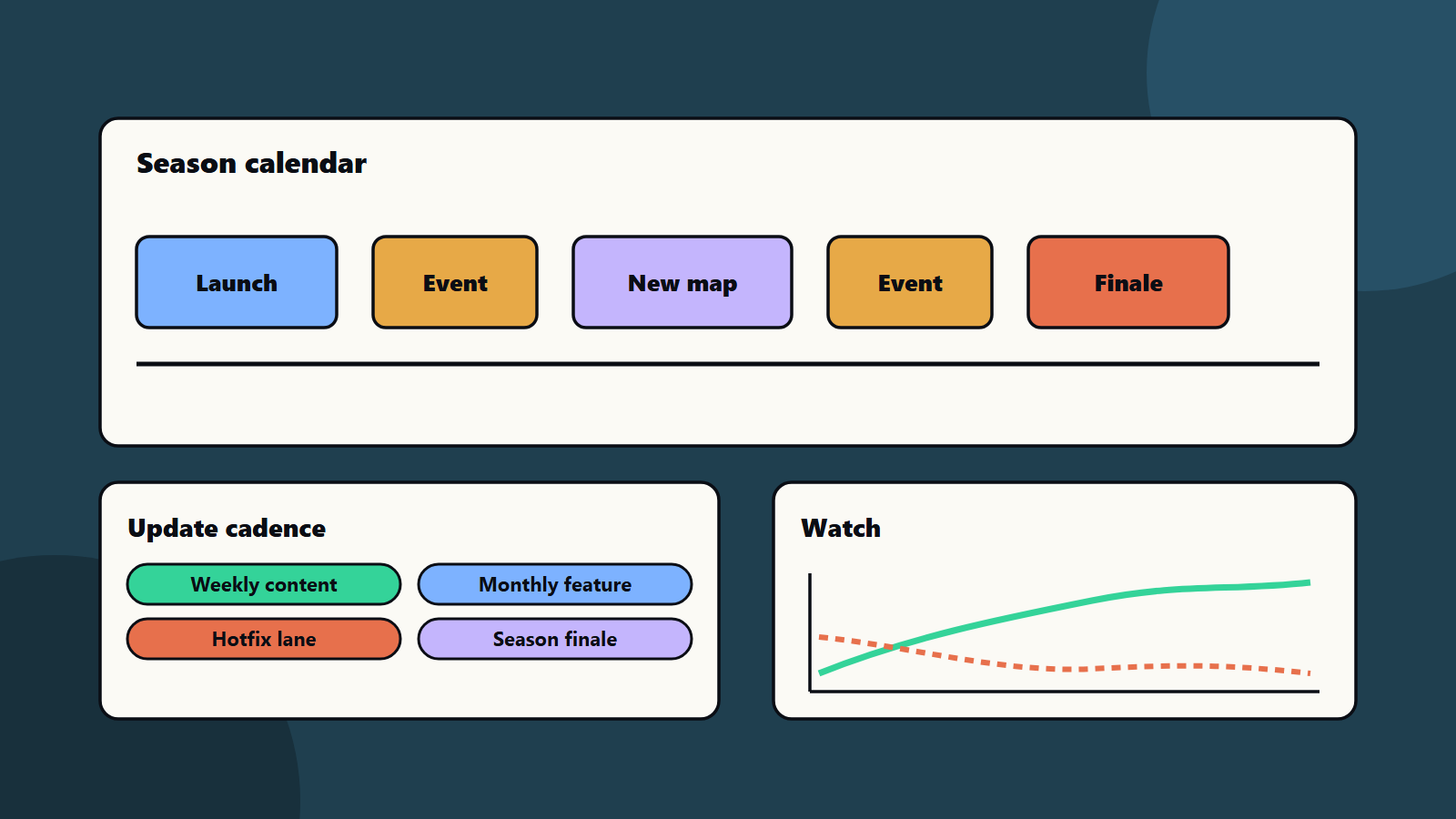
A calendar gives rhythm. A common shape:
- Weekly: small content drops and community posts.
- Monthly: a larger feature or event.
- Season: a theme with a start, middle and finale, often a few months long.
Plan content weeks ahead, and keep slack for surprises. Mix new content with returning favourites. Avoid burnout in the team and in players. The game development pipeline shows how live work links to earlier stages.
Events and seasons
Good events have a clear goal, a fair reward and a visible end. Think about:
- Why would a player care? A story, a prize or a challenge.
- How long does it take? Respect time and jobs.
- Can new and returning players join?
- Is it fair? Avoid designs that force spending.
- What happens after? Rewards that stay valuable keep trust.
Money rules matter. For example, Apple’s App Review Guidelines require apps that sell randomised items to disclose the odds before purchase. Read the current rules from every store you use, and see mobile game monetisation.
Update rhythm and release safety
- Regular releases: predictable days help players and teams.
- A hotfix lane: a fast path for urgent bugs, with a smaller test pass.
- Feature flags and remote config: turn features on or off without a new build. See our CI/CD starter pipeline and zero-downtime deployments.
- Staged rollouts: release to a small share first.
- Rollback plans: know how to undo a bad release.
- Platform rules: each store and console has its own update checks. See console game development.
Use data and feedback
Track retention, session length, progress and spending, then compare cohorts. See game analytics. Read reviews, forums and support tickets too. Numbers show what happens, and players explain why.
Run careful experiments before big changes. Change one thing at a time where you can.
Keep servers and quality strong
Live games need stable back ends. Plan for launch spikes and event peaks. See multiplayer netcode and performance testing. Add every new content drop to your test plan. See game testing and QA.
Communicate with players
- Share a roadmap, and say it can change.
- Post patch notes in plain words.
- Tell players quickly about outages, with updates.
- Thank the community, and show you listened.
- Moderate with clear rules. See community building for software brands.
Care for the team
Live work never stops, so plan sustainable shifts and on-call rotas. Keep post-incident reviews blame free. Our guide to site reliability engineering has useful habits.
Common mistakes
- No live tools at launch.
- A calendar with no slack.
- Events that pressure players to spend.
- Ignoring feedback until reviews turn bad.
- Big changes with no test or staged release.
- Silence during problems.
- Burning out the team.
A starting plan
- Build a twelve-week content calendar.
- Set the update rhythm and the hotfix lane.
- Add telemetry, remote config and staged rollouts.
- Write the player communication plan.
- Review game live operations metrics every week.
How SoftSapien supports game live operations
SoftSapien’s game engineers, QA specialists and data analysts help studios set up game live operations: tools, release pipelines, monitoring, analytics and support for mobile, PC and console titles. See our game development and DevOps services.
To keep your game thriving, use the contact page to chat with our team, send a message or schedule a free consultation call.
Frequently asked questions
What is game live operations?
The work of running a game after launch: events, seasons, updates, support, community, monitoring and the business side.
How often should a live game update?
Many use weekly content drops, a monthly feature, seasons of a few months and a hotfix lane for urgent bugs.
What tools are needed before launch?
Telemetry, remote configuration, feature flags, staged rollouts and a rollback plan.
How should we handle money mechanics?
Keep them fair, and read each store rules, since some require disclosure of odds for randomised items.
Can SoftSapien help run live operations?
Yes, with tools and support. Contact SoftSapien through the contact page to chat with our team, send a message or schedule a free consultation call.