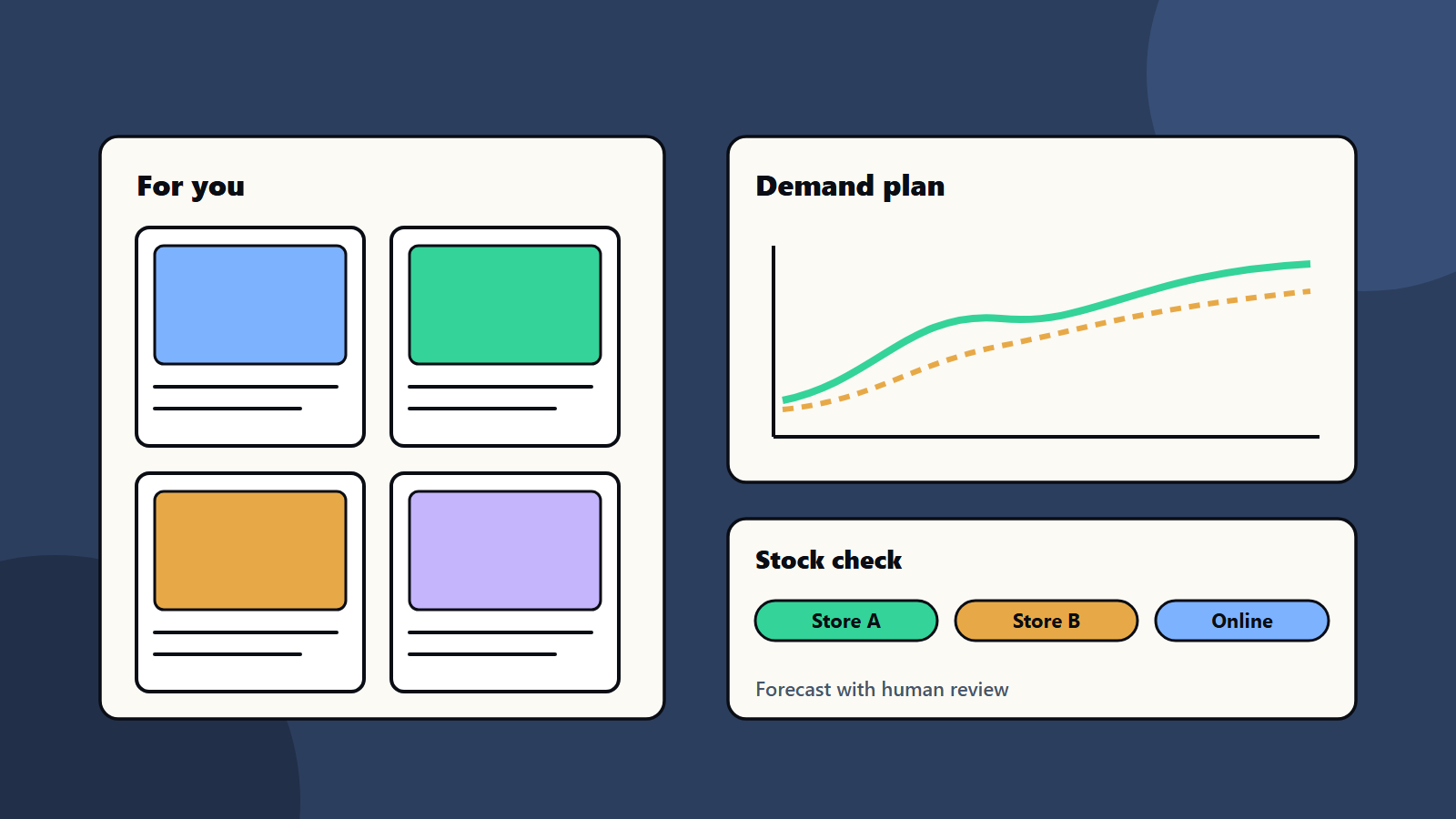
Short on time? Retail AI pays off most in two places: showing each shopper relevant products and planning stock so shelves match demand. Start with clean product, sales and stock data, pick one use case, test against a simple baseline, keep people reviewing forecasts and respect privacy law and customer trust. A small shop and a global chain follow the same steps at different scale.
Every retailer faces two questions each day. What should we show this customer, and how much of each product should we have, and where? Answer the first well and shoppers find what they want. Answer the second well and shelves stay full without piles of unsold stock.
AI helps with both, and the quality of the data and the care of the rollout decide whether it works. This guide explains personalisation and demand planning in plain terms for independent online shops and large multichannel retailers.
Key takeaways
- Personalisation uses behaviour and product data to show relevant items, content and offers.
- Demand planning forecasts sales by product, place and time, so that stock matches demand.
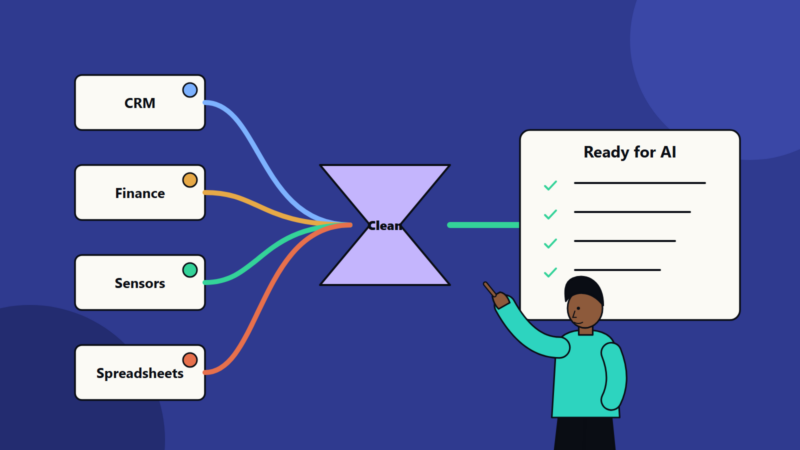
- Both depend on clean, joined-up data: products, prices, sales, stock, promotions and customers.
- Start with one use case, compare with a simple baseline and measure business results.
- Keep human review, protect customer data and be open about how recommendations work.
Personalisation
What it covers
- Product recommendations: similar items, frequently bought together and picks based on browsing and purchase history.
- Search and navigation: results ranked by relevance to the person, with better handling of typos and synonyms.
- Content and email: different messages for different segments or individuals.
- Offers and pricing: targeted promotions. Pricing needs particular care for fairness and legal rules.
- Size and fit advice, and visual search.
- Next best action in stores and contact centres, with tools that suggest products to store and service teams.
How it works in outline
Models learn patterns from past behaviour: people who bought this also bought that, or shoppers who browse these categories respond to those offers. Simple methods such as popular items and recently viewed lists often give most of the gain. More advanced models add context such as time, device, location and stock. Newer language models can help with product descriptions and conversational shopping assistants, and they need checking for accuracy. See retrieval-augmented generation and enterprise AI chatbots.
Start small
- Pick one placement, such as the product page recommendations or a post-purchase email.
- Build a baseline with simple rules, such as best sellers in the category.
- Run a controlled test, with half of visitors seeing the AI version.
- Measure conversion, average order value and returns, and also complaints and opt-outs.
- Extend when results hold up.
Our guide to digital experience personalisation, starting small covers the approach in depth.
Privacy and trust
- Follow privacy laws in each market, including consent for tracking and profiling.
- Use first-party data you hold with permission, and be careful with third-party data.
- Explain recommendations in plain language and give controls.
- Avoid unfair treatment, such as price differences that customers would find unacceptable or that laws forbid.
- Be careful with sensitive categories, since a recommendation can reveal private matters.
- Secure the data. See small business cybersecurity.
Demand planning
What it covers
- Forecasting sales by product, store or channel, and week or day.
- Promotion and event effects: how discounts, holidays and weather change demand.
- New product forecasts, using similar items.
- Replenishment: how much to order and when, given lead times and minimum quantities.
- Allocation: which store or warehouse gets which stock.
- Markdown and clearance planning.
- Returns and waste, especially for perishables.
How it works in outline
Forecasting models learn from sales history, prices, promotions, calendar effects, weather, stock availability and sometimes search or social signals. Classic statistical methods remain strong for stable products, and machine learning helps where many factors interact. Good practice includes several models, human review for important items and an honest measure of forecast error. See our guide to demand forecasting and predictive analytics.
Data pitfalls
- Sales are not demand: when an item sells out, recorded sales understate demand. Track stockouts, and adjust.
- Promotion effects need clean records of what ran and when.
- Product changes: new codes, pack sizes and substitutions break history.
- Channel differences between online, store and wholesale.
- Lead time variability from suppliers.
Start small
- Choose a product group with enough history, such as a fast-moving category.
- Set a baseline, such as last year’s sales or a moving average.
- Test the model on past periods the model has not seen.
- Run in shadow mode with planners, then compare.
- Move to supported decisions, and monitor.
Data foundations for both
Personalisation and planning rely on shared data:
- A consistent product catalogue with attributes.
- Transactions across channels, linked to customers where consent exists.
- Stock positions and supplier lead times.
- Price and promotion history.
- A governed platform for analysis. See data lakehouse architecture and data quality for machine learning.
- Dependable pipelines. See data pipeline reliability.
If you are deciding where to begin, our guide to choosing your first AI use case provides a scoring method, and AI for small businesses suits sole proprietors.
People and process
- Planners and merchandisers keep final say on large or unusual decisions, and the system shows its reasoning and uncertainty.
- Share forecasts across buying, finance, marketing and operations, so that promotions and stock plans agree.
- Train teams, and gather feedback about wrong recommendations. See change management in technology programmes.
- Set up governance for models. See responsible AI policy.
Measure
- Personalisation: conversion rate, average order value, repeat purchase, returns and opt-out rate.
- Planning: forecast accuracy by category, stockout rate, overstock and markdown cost, waste and inventory turns.
- Customer: satisfaction and complaints.
- Financial: margin, working capital and profit per visit.
- Operations: time planners spend on routine work.
Track the cost of running the models too. See measuring AI cost.
Common mistakes
- Starting with the most complex model.
- Poor product data, with missing attributes and duplicates.
- Treating sales as demand.
- No baseline, so benefits are unclear.
- Ignoring privacy and consent.
- Recommendations that push out-of-stock items.
- Forecasts with no human review.
- Measuring clicks and ignoring margin.
A starting plan
- Audit product, sales and stock data quality.
- Choose one personalisation placement and one planning category.
- Build baselines, then test AI versions.
- Put governance in place for data use and models.
- Review results monthly, and extend step by step.
How SoftSapien supports AI in retail
SoftSapien’s data scientists and engineers prepare retail data, build and test recommendation and forecasting models, integrate them with commerce and planning systems and monitor results. See our AI development and data science services.
To plan AI for your retail business, use the contact page to chat with our team, send a message or schedule a free consultation call.
Frequently asked questions
Where does AI help retailers most?
In personalisation, which shows each shopper relevant products and content, and in demand planning, which matches stock to forecast demand.
Why are sales not the same as demand?
When an item sells out, recorded sales understate demand. Track stockouts and adjust forecasts for them.
How do we start?
Pick one placement and one product category, build a simple baseline, test the AI version against it and measure business results.
What privacy rules apply?
Laws on consent, tracking and profiling differ by market. Use first-party data with permission, explain recommendations and give controls.
Can SoftSapien help with retail AI?
Yes, from data to deployment. Contact SoftSapien through the contact page to chat with our team, send a message or schedule a free consultation call.